


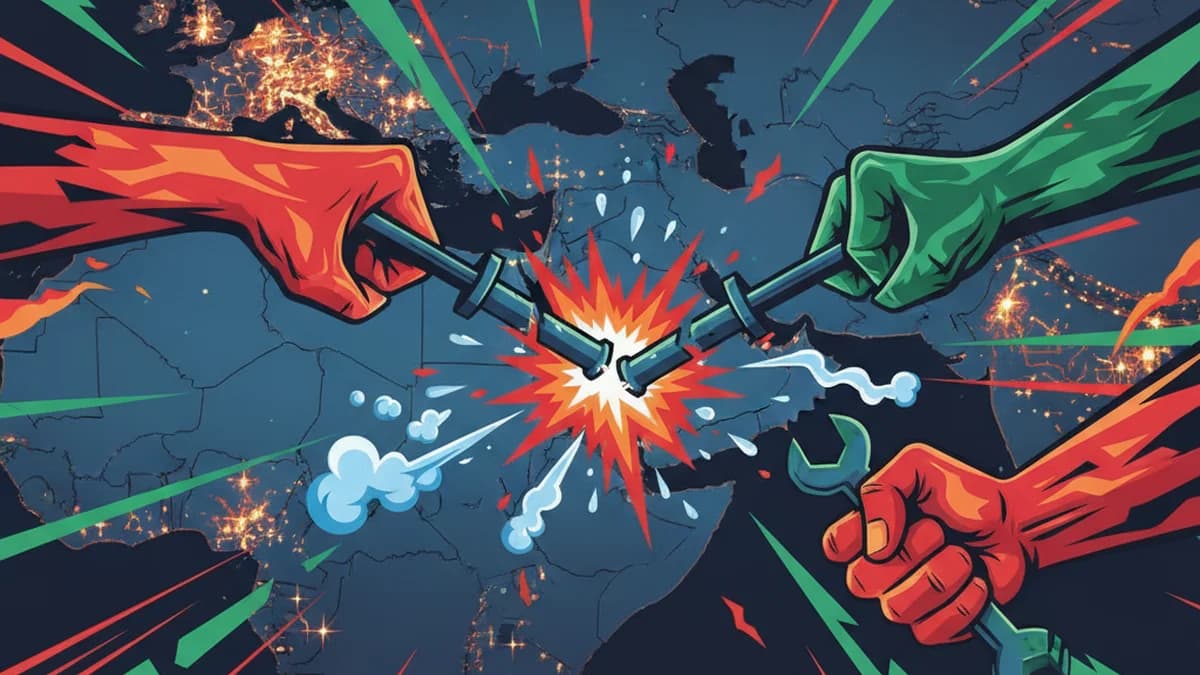
Global energy markets are currently witnessing a sharp spike in gas prices, signaling a deepening Middle East gas crisis. This immediate reaction follows reports of an Israeli attack on Iran's main gas field, which reportedly prompted Iran to retaliate against Qatari gas facilities.
The rapid escalation of hostilities directly impacts critical energy infrastructure. This sequence of events raises serious concerns about the stability of gas supply from a vital global region.
Analyzing the Middle East Gas Crisis Escalation
The reported Israeli strike on Iran's primary gas field marks a significant escalation in regional tensions. This initial action set off a chain reaction, directly affecting key energy assets.
Iran's subsequent retaliatory strikes against Qatar's gas facilities further destabilize the energy landscape. Qatar stands as a major global exporter of liquefied natural gas (LNG), making any disruption to its facilities critically important. (according to ESPN)
Global Repercussions of the Energy Disruption
Analysts are closely monitoring the situation as the attacks threaten to disrupt a significant portion of the world's natural gas supply. Energy traders are already pricing in increased risk premiums, leading to higher costs for consumers worldwide. (according to BBC Sport)
The ongoing instability underscores the vulnerability of global energy supplies to geopolitical conflicts. Nations are now assessing potential contingency plans to mitigate the economic fallout from this unfolding crisis.
Reference: Al Jazeera – Breaking News, World News and Video from Al Jazeera











Responses (0)