


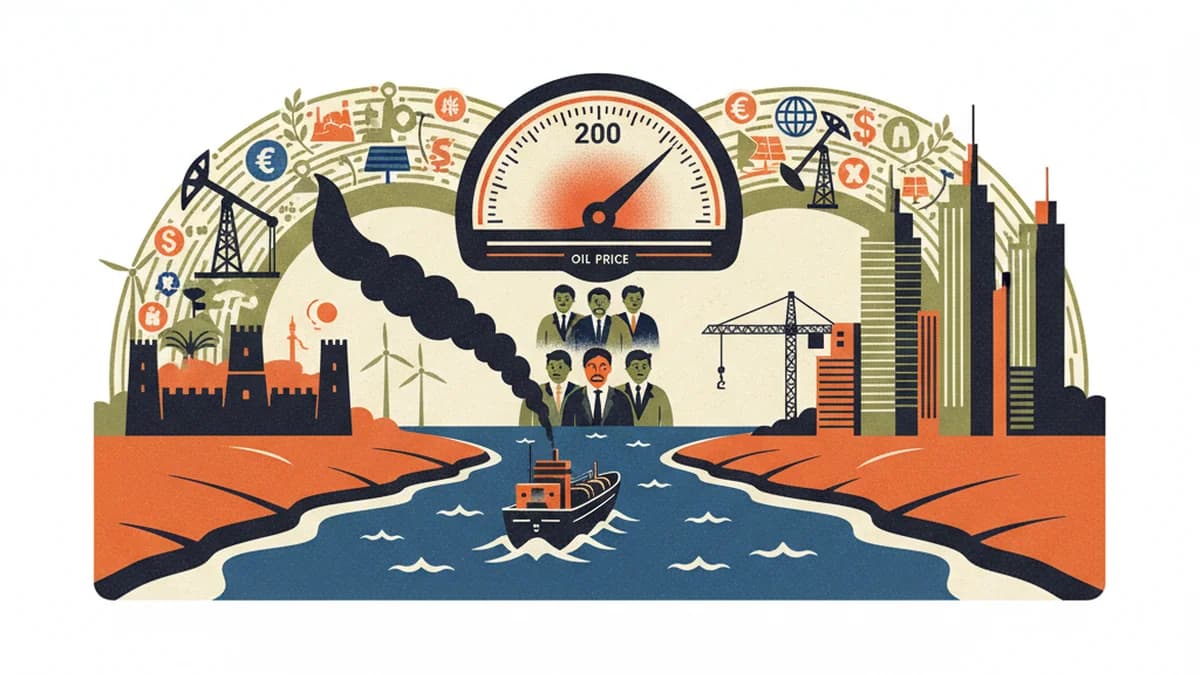
Market analysts are sounding alarms over the potential for global crude oil prices to surge to an unprecedented $200 per barrel. This stark prediction hinges on the continued effective closure of the Strait of Hormuz, a critical chokepoint for international oil shipments.
Experts, who once dismissed such figures as extreme, now view the scenario as a tangible risk. A significant disruption in this vital waterway would severely impact global supply chains, pushing energy costs to historic highs.
Strait of Hormuz: A Critical Chokepoint for Global Oil Prices
The Strait of Hormuz represents the world's most important oil transit choke point. It connects the Persian Gulf with the Arabian Sea and is a primary route for oil tankers carrying crude from major producers in the Middle East.
Approximately one-fifth of the world's total petroleum consumption, and roughly a third of all seaborne traded oil, passes through this narrow passage daily. Any prolonged impediment to shipping traffic here would immediately reduce global supply, triggering a sharp price increase. (according to Al Jazeera)
Economic Repercussions of $200 Oil
A sustained climb in oil prices to $200 per barrel would unleash severe economic repercussions worldwide. Businesses would face escalating operational costs, potentially leading to higher inflation and reduced consumer spending. (according to Reuters)
Governments would grapple with economic instability, while consumers would endure significantly higher costs for fuel, transportation, and goods. The ripple effect could trigger a global recession, impacting nearly every sector of the economy.
Reference: Al Jazeera – Breaking News, World News and Video from Al Jazeera















Responses (0)