


Experts Call for Comprehensive Reforms and Tax Relief to Unlock Pakistan’s 5G Potential
By:Aamir Shahjeehan Malik
ISLAMABAD — Leading policymakers, health and education experts, and telecom industry giants warned today that Pakistan risks falling behind in the global digital race without urgent tax reforms and infrastructure upgrades. Speaking at a seminar hosted by the Sustainable Development Policy Institute (SDPI), stakeholders revealed that a successful 5G rollout could contribute up to $20 billion annually to Pakistan’s economy by revolutionizing industry, agriculture, and healthcare.
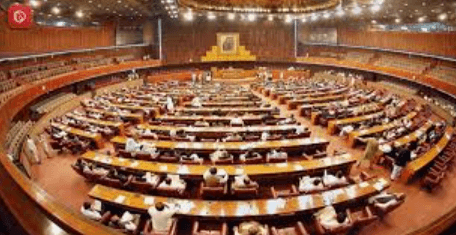
The dialogue, titled "Building a 5G Economy," emphasized that affordable internet and modern digital frameworks are no longer luxuries but necessities for survival in the era of Industry 4.0. Experts noted that while the Data Protection Bill has been presented in the Senate to pave the way for foreign investment, significant fiscal hurdles remain.
The $20 Billion Economic Impact and Industry 4.0
Brigadier (R) Mohammad Yasin, Senior Advisor Emeritus at SDPI, highlighted that 5G technology is the backbone of the Fourth Industrial Revolution. He noted that integrating 5G with national economic policies would drive:
Enhanced Productivity: A potential 5% increase in industrial output.
Smart Agriculture: Real-time data for crop monitoring and yield optimization.
Telehealth & E-Education: Expanding high-quality services to remote rural areas.
Senator Dr. Afnan Ullah Khan added that the Data Protection Bill is a prerequisite for multi-billion dollar Foreign Direct Investment (FDI) in data centers, which will provide the necessary "cloud" backbone for 5G services.
Taxation: The Biggest Barrier to Digital Inclusion
The telecom sector voiced serious concerns over the current fiscal environment. Fatima Akhtar of Jazz Pakistan revealed that approximately 40% to 45% of telecom revenue is currently consumed by taxes. This heavy burden limits the ability of operators to invest in the extensive fiber-optic networks required for 5G.
Dr. Muhammad Mukram Khan, DG Cyber Vigilance at the PTA, confirmed that while the authority is preparing to auction an additional 120 MHz of spectrum, they are simultaneously pushing the government to reduce taxes on mobile services and handsets. Experts agreed that without affordable smartphones and lower service costs, the benefits of 5G will remain inaccessible to the general public.
Strategic Roadmap for Implementation
Jehanzeb Rahim from the Ministry of IT & Telecom shared that the government has already cleared 480 MHz of 5G spectrum for operators and is finalizing frameworks for the Internet of Things (IoT) and Low-Orbit Satellites. However, the consensus among attendees—including representatives from PTCL and LearnAsia—was that the following steps are mandatory for success:
Infrastructure Sharing: Allowing operators to share towers and fiber to reduce costs.
Right of Way (RoW): Simplifying the process for laying fiber cables across provinces.
Local Manufacturing: Encouraging the production of 5G-ready devices within Pakistan.









回复 (0)