


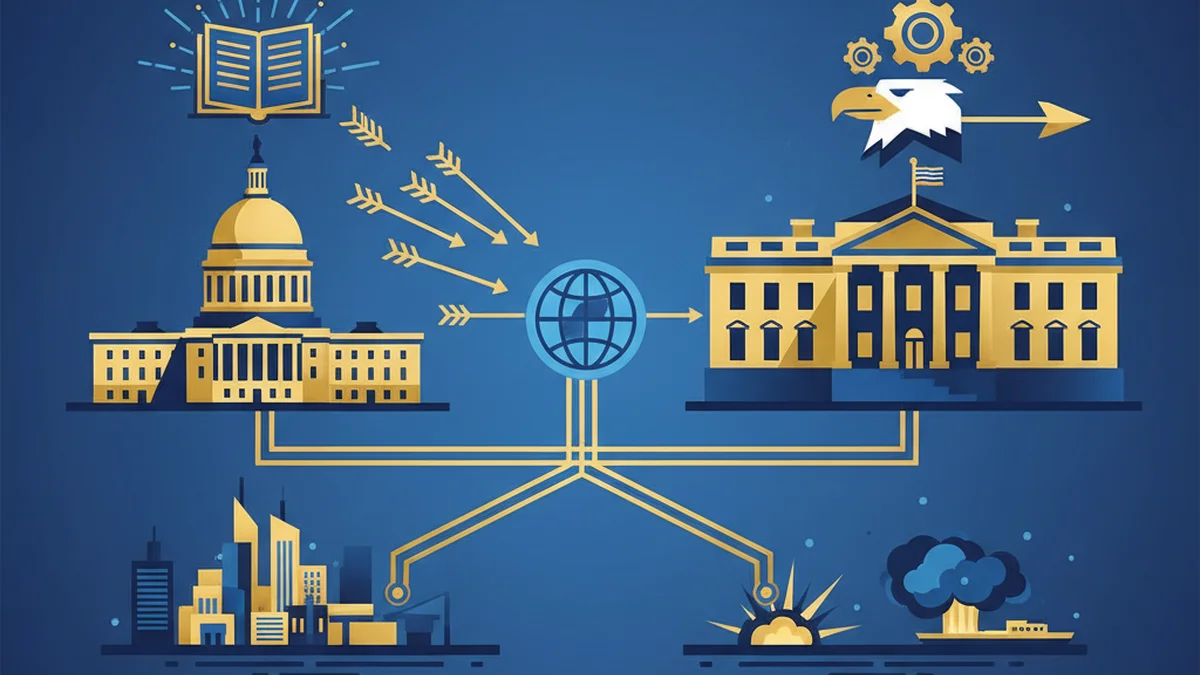
The question of who holds the ultimate authority to declare war in the United States persistently fuels debate between the executive and legislative branches. US presidents frequently initiate military actions without formal congressional declarations, sparking pushback from lawmakers who seek to uphold their constitutional powers.
The Constitutional Mandate to Declare War
The U.S. Constitution clearly vests the power to declare war solely with Congress. Article I, Section 8 enumerates this specific legislative responsibility, intended to ensure collective deliberation before committing the nation to conflict. This framework aims to prevent unilateral executive decisions regarding military engagement.
However, the President serves as the Commander-in-Chief of the armed forces, a role outlined in Article II, Section 2. This executive authority allows the President to direct military operations once Congress has authorized them, or to defend the nation against sudden attacks. The tension arises in defining the precise boundaries of these distinct powers. (according to Reuters)
Presidential Actions and Congressional Responses
Throughout history, numerous US presidents have deployed troops and engaged in hostilities without a formal declaration of war from Congress. These actions often rely on resolutions authorizing the use of military force (AUMFs) or claims of inherent executive authority. Such precedents have significantly broadened the scope of presidential war powers. (according to South China Morning Post)
In response, members of Congress have repeatedly attempted to reassert their constitutional prerogative. Lawmakers often introduce legislation or resolutions aimed at limiting presidential actions or demanding greater transparency and approval for military interventions, highlighting the enduring struggle over who truly has the power to declare war.
Reference: Al Jazeera – Breaking News, World News and Video from Al Jazeera











Responses (0)