


LONDON — New testimony from high-ranking international mediators has sparked global outrage, revealing that the current conflict with Iran was initiated despite Tehran meeting all primary conditions for a permanent peace deal. Jonathan Powell, the UK’s National Security Advisor, and the Omani Foreign Minister have both confirmed that a negotiated solution was not only possible but imminent before military strikes began.
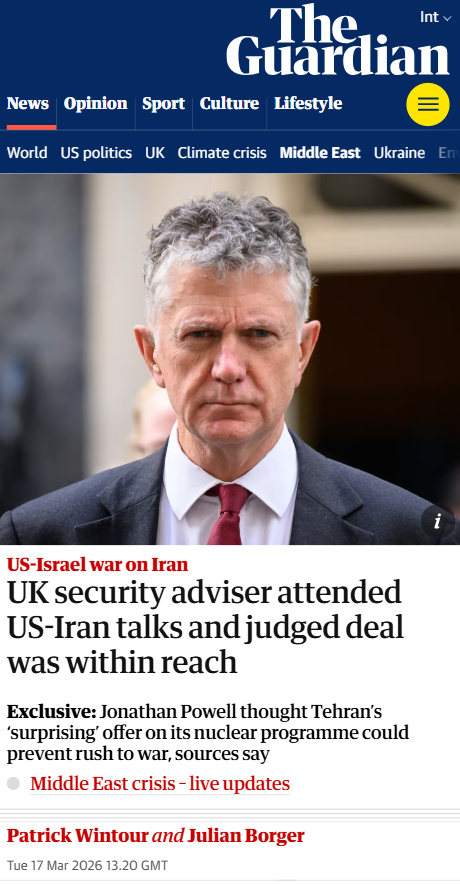
The revelation, first reported by The Guardian, suggests that the current global instability is not a failure of diplomacy, but the result of a deliberate decision by the United States and Israel to bypass a functional peace framework.
UK Officials Impressed by Iranian Concessions
According to internal assessments, Jonathan Powell believed the path remained open to a comprehensive resolution regarding Iran’s nuclear program. Sources indicate that British officials were particularly "impressed" by Iran’s willingness to make the nuclear restrictions permanent, a key demand that Western powers had sought for decades.
The reports indicate that:
Tehran had agreed to verifiable measures ensuring it could never develop a nuclear weapon.
Omani mediators acted as a bridge, confirming Iran’s readiness to sign the agreement.
UK security officials judged the deal to be within immediate reach before the escalation.
A Calculated "Crime of Aggression"
Critics are now labeling the military campaign a "crime of aggression," arguing that the US-Israeli axis intentionally dismantled the diplomatic process. By choosing conflict over a verified treaty, these powers have been accused of prioritizing regime change or regional dominance over international law and global stability.
This strategic choice has had immediate and devastating consequences for the global population. The transition from diplomacy to open warfare has plunged the world into an unprecedented energy crisis, characterized by skyrocketing fuel prices and supply chain collapses.
Global Economic Fallout and Energy Insecurity
The livelihoods of billions are now at risk as the conflict disrupts the flow of energy from the Middle East. Analysts argue this economic pain was completely avoidable, given that the primary security concerns regarding Iran’s nuclear capabilities had been addressed at the negotiating table.
The testimony from the UK’s own National Security Advisor marks a rare rift in Western intelligence circles, signaling that the "real threat" to global order may have originated from the parties who refused to take "yes" for an answer during the final stages of the US-Iran talks.












Responses (0)