

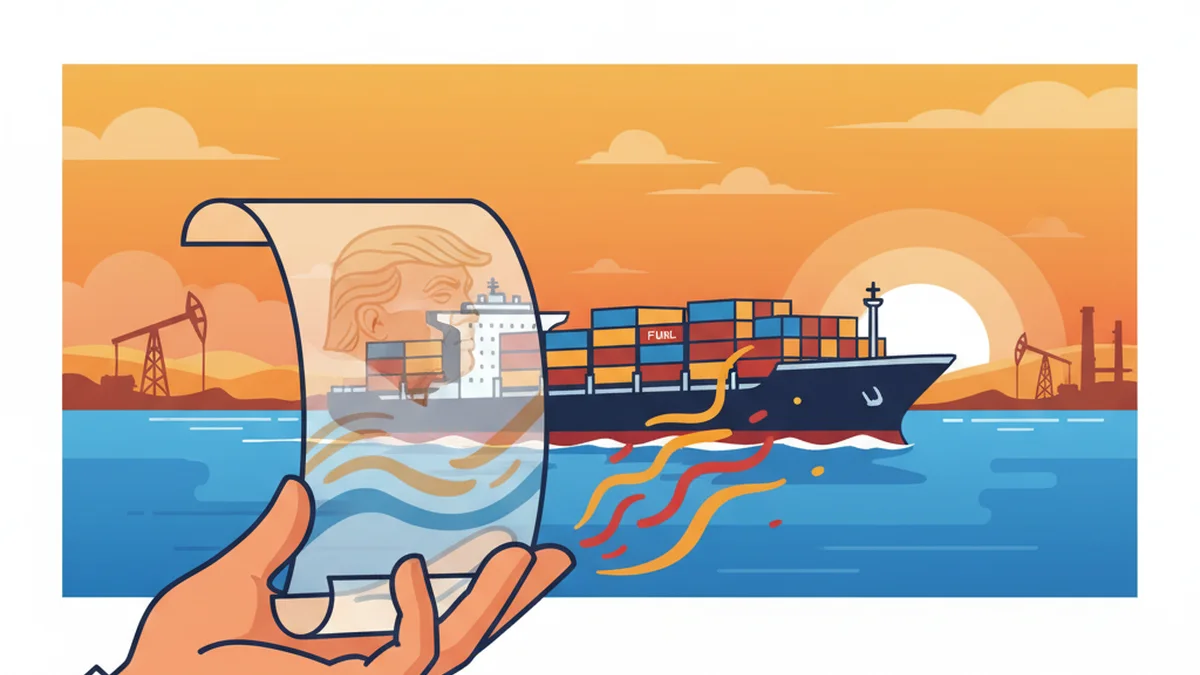
President Donald Trump has announced a temporary suspension of the century-old Jones Act, a move intended to alleviate soaring domestic fuel costs. This significant Jones Act waiver permits foreign-flagged vessels to transport cargo, including oil and gas, between U.S. ports, a practice typically restricted to American-owned and operated ships.
The administration's decision comes as consumers face escalating prices at the pump and businesses grapple with increased shipping expenses. This temporary measure seeks to inject more capacity into the domestic shipping market, potentially driving down costs by increasing supply.
Understanding the Jones Act Waiver
Enacted in 1920, the Merchant Marine Act, commonly known as the Jones Act, mandates that all goods shipped between U.S. ports must be carried on vessels built in the United States, owned by U.S. citizens, and crewed by U.S. citizens. Its primary goals include maintaining a strong domestic merchant marine for economic and national security purposes.
The current Jones Act waiver represents a departure from this long-standing policy, albeit for a limited period. Supporters argue that opening domestic routes to foreign ships will immediately address bottlenecks and reduce the financial burden on industries reliant on maritime transport, from manufacturing to tourism-related supply chains. (according to Lonely Planet)
Debate Over Efficacy and Impact
While the administration highlights the immediate potential for cost relief, critics question the long-term efficacy of such temporary waivers. Skeptics argue that the impact might be minimal, given the complex logistics of rerouting international vessels and the dominant role of global oil prices. (according to National Geographic Travel)
Opponents of the waiver also voice concerns about undermining the domestic shipping industry and national security interests that the Jones Act was designed to protect. They contend that a temporary measure does little to address the underlying structural issues contributing to high fuel costs or the need for a robust U.S. merchant fleet.
The temporary waiver is now in effect, and stakeholders across various sectors are closely monitoring its impact on fuel prices and broader economic indicators.
Reference: Al Jazeera – Breaking News, World News and Video from Al Jazeera













Responses (0)