
ISLAMABAD : In a wide-ranging press briefing held on March 17, 2026, the Russian Ambassador to Pakistan, Albert P. Khorev, detailed Moscow's stance on the escalating conflicts in Ukraine and the Middle East. Addressing a gathering of Pakistani journalists, the Ambassador characterized the ongoing war in Ukraine as a "broader confrontation" with the collective West, asserting that the current military momentum favors Russian forces.
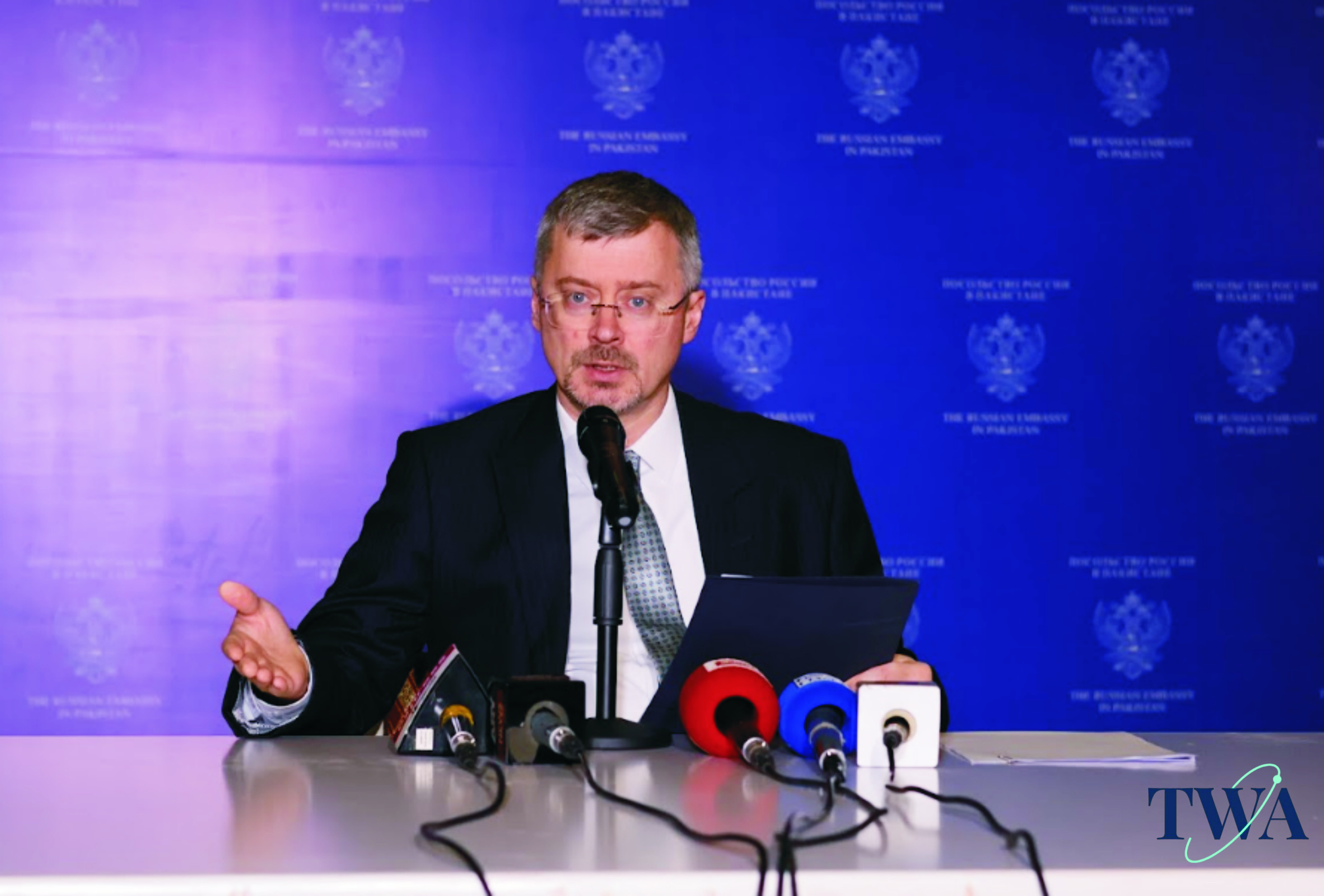
Ambassador Khorev highlighted that while frontline operations continue, diplomatic channels remain active. He revealed that several rounds of talks in 2026 have already yielded humanitarian progress, specifically regarding prisoner exchanges. However, he maintained that any permanent settlement must address Russia's core security concerns, including NATO’s eastward expansion and the protection of Russian-speaking populations.
Dispute Over Humanitarian Claims and Child Repatriation
The Ambassador used the briefing to forcefully reject Western allegations regarding the "forced transfer" of Ukrainian children. Ambassador Khorev labeled international figures as "Ukrainian propaganda," arguing they do not reflect the reality on the ground.
According to the Russian mission:
In 2025, Ukraine provided a list of only 339 children who had lost contact with families.
As of early March 2026, thirteen children have been safely repatriated to Ukraine.
The process is described as "mutual," with children also being returned from Ukraine to Russia.
Condemnation of "U.S.-Israeli Aggression" in Iran
Turning to the Middle East, the Ambassador issued a scathing condemnation of recent military actions against Iran. He described the invasion as a violation of international law, triggered by a "pretext" regarding nuclear weapons that the International Atomic Energy Agency (IAEA) has not verified.
The Ambassador specifically condemned the assassination of Ayatollah Ali Khamenei, Iran’s Supreme Leader, and reported strikes on civilian infrastructure, including a school in Minab. He warned that these actions by the U.S. and Israel risk a total destabilization of the region, urging the international community to recognize the sovereignty of Gulf states.
A Call for Diplomatic Restraint
In his concluding remarks, Khorev emphasized that long-term stability in both Eastern Europe and the Middle East can only be achieved through political and diplomatic solutions. He stressed that global security must be based on a respect for sovereignty and the legitimate security interests of all neighboring countries, rather than unilateral military force.
What is Russia’s current position on the Ukraine conflict in 2026?
Ambassador Albert P. Khorev stated that the frontline currently favors Russian forces. He maintains that while Russia is open to negotiations, any deal must stop NATO's eastward expansion and end discrimination against Russian-speakers in Ukraine.
Has there been progress on prisoner exchanges between Russia and Ukraine?
Yes. The Russian Ambassador confirmed that several rounds of diplomatic talks in 2026 have led to successful prisoner exchanges and other humanitarian milestones.
How did Russia respond to the situation in Iran?
Russia strongly condemned the U.S. and Israeli military actions in Iran, including the assassination of the Supreme Leader. The Ambassador called these acts a "crime of aggression" based on unproven claims regarding Iran's nuclear program.





Responses (0)