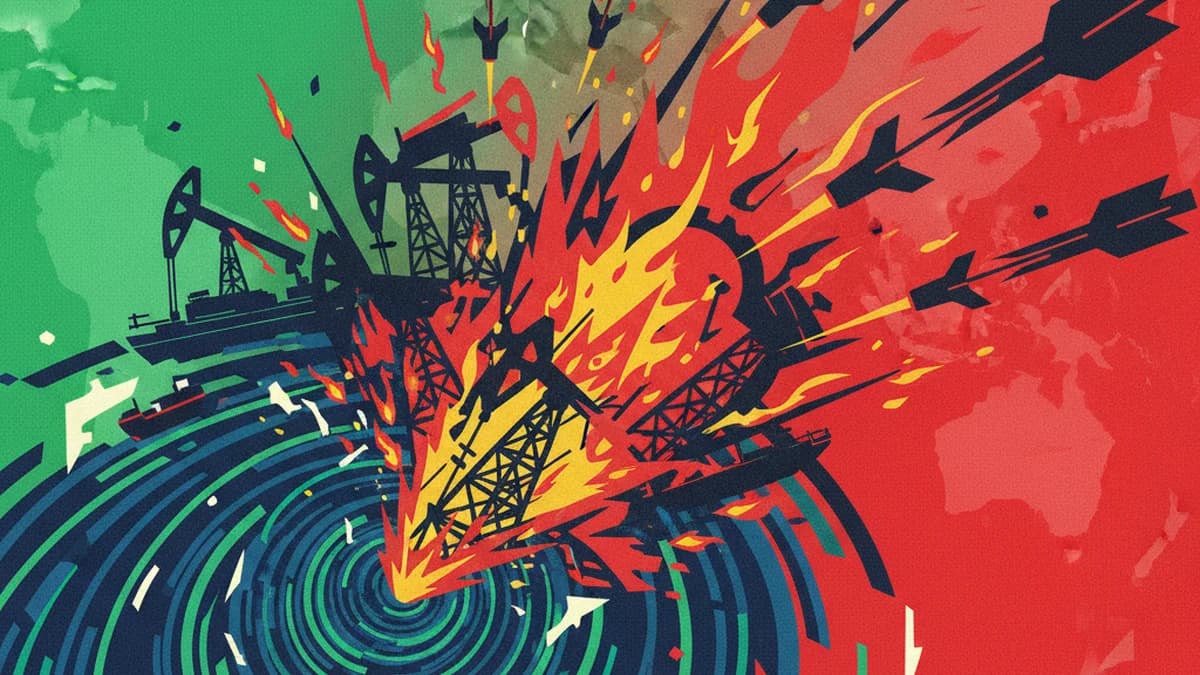
Recent military actions targeting Iran's South Pars and Qatar's Ras Laffan natural gas facilities are intensifying the already volatile Persian Gulf energy crisis. These critical incidents immediately deepen regional tensions and threaten to destabilize global energy markets.
Understanding the Persian Gulf Energy Crisis: Why South Pars and Ras Laffan Matter
Iran's South Pars field represents the world's largest non-associated natural gas reservoir, shared with Qatar. Its immense output is crucial for Iran's domestic energy needs and its export capabilities, making it a cornerstone of the nation's economy.
Across the maritime border, Qatar's Ras Laffan Industrial City is home to the world's largest liquefied natural gas (LNG) export facility. It is a pivotal global supplier, ensuring energy security for numerous importing nations worldwide, particularly in Asia and Europe.
Escalating Tensions and Global Ramifications
Attacks on such vital infrastructure send immediate shockwaves through international energy markets. Disruptions to production or export from these sites could trigger significant price hikes and supply shortages globally. (according to ESPN)
Beyond economic impacts, these actions dramatically escalate geopolitical friction within the Gulf region. The targeting of essential energy assets risks broader conflict, drawing in international actors and further destabilizing an already fragile area. (according to BBC Sport)
The international community now watches closely as these developments unfold. The security of these critical energy hubs remains paramount for both regional peace and global economic stability amid the ongoing Persian Gulf energy crisis.
Reference: Al Jazeera – Breaking News, World News and Video from Al Jazeera











Responses (0)