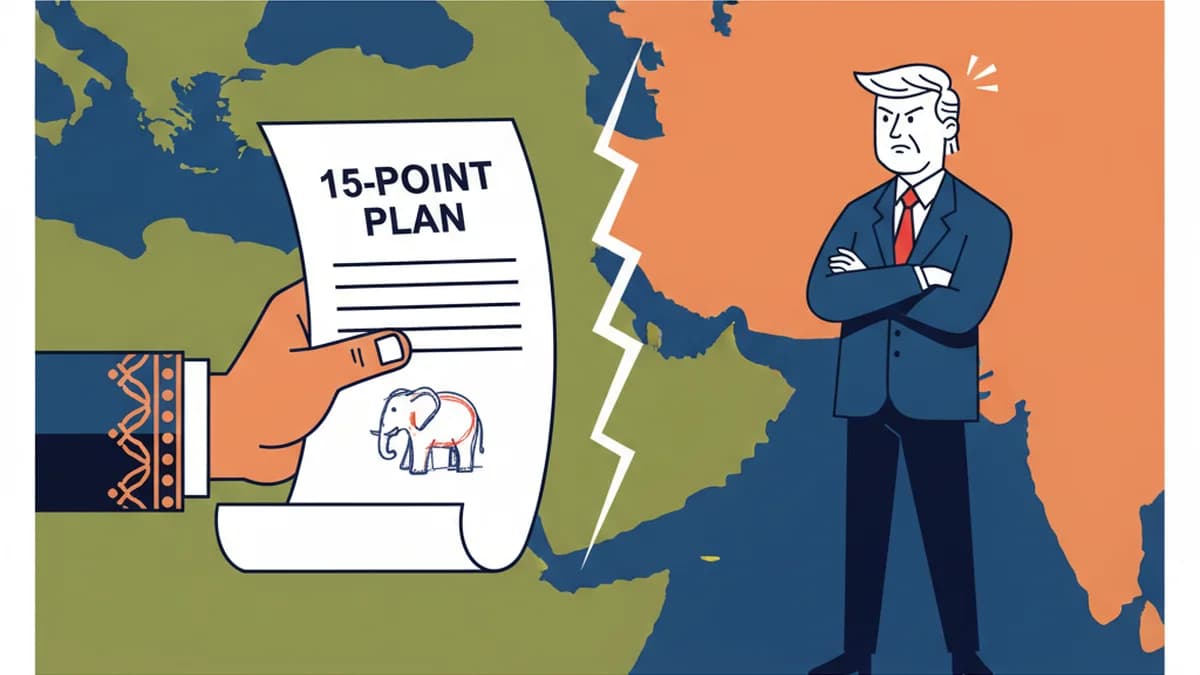
Iranian officials have unequivocally stated that former President Donald Trump's 15-point proposal does not lay the groundwork for effective Iran diplomacy. This firm rejection highlights the enduring chasm between Tehran and Washington regarding potential negotiations.
Tehran's Stance on Future Iran Diplomacy
Tehran views the comprehensive 15-point plan, initially outlined by the Trump administration, as an extension of its "maximum pressure" campaign. Rather than fostering dialogue, Iranian leaders perceive the conditions as demands for capitulation.
This perspective suggests a fundamental disagreement on the prerequisites for any meaningful engagement between the two nations. For many in Iran, the proposal represents an attempt to dictate terms rather than initiate a balanced diplomatic process.
They maintain that true Iran diplomacy requires mutual respect and a willingness to negotiate without preconditions that undermine national sovereignty.
The Context of Trump's Proposal
The 15-point plan emerged following the United States' withdrawal from the Joint Comprehensive Plan of Action (JCPOA), the 2015 nuclear deal. It detailed a series of stringent demands, including ending its ballistic missile program and ceasing support for regional proxy groups.
The Trump administration presented these points as necessary steps for a new, broader agreement. However, Iran consistently dismissed these demands as unrealistic and intrusive.
Iranian officials have reiterated their preference for a return to the original nuclear accord or a framework built on its principles, rather than an entirely new set of conditions imposed unilaterally.
The current impasse underscores the persistent challenges in fostering constructive Iran diplomacy. Both sides remain entrenched in their positions, making any immediate breakthrough appear unlikely as long as these differing interpretations of diplomatic engagement persist.
Reference: aljazeera.com










Responses (0)