


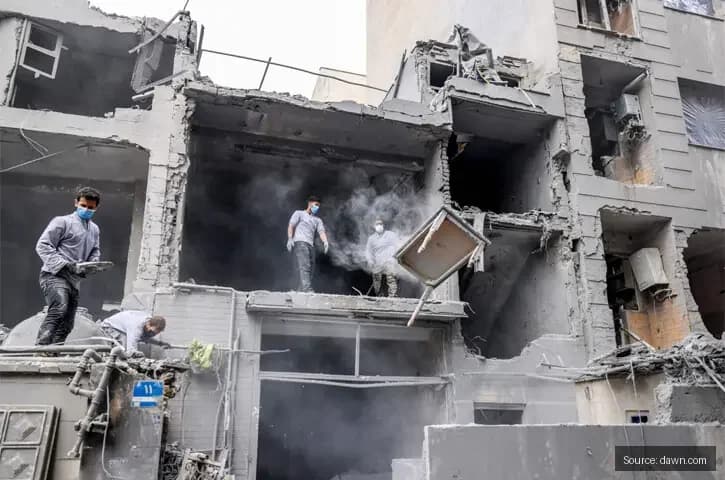
The escalating Iran conflict reaches a critical juncture as the United States urges global allies to deploy warships to the Strait of Hormuz. This call comes amid fresh attacks on US facilities and crucial energy infrastructure, significantly heightening regional tensions. Meanwhile, Iran firmly rejects any negotiation attempts, warning other nations to avoid actions that could further expand the hostilities.
Global Powers Grapple with Iran Conflict Escalation
US President Donald Trump has specifically appealed to countries like China, France, Japan, South Korea, and the UK to contribute naval assets. The aim is to safeguard vital energy supplies flowing through the Strait of Hormuz, a key global shipping lane. Iran's actions have severely disrupted maritime traffic there, causing a significant surge in global petroleum prices.
While the US seeks reinforcement, the UK Ministry of Defence remains non-committal regarding direct naval deployment. South Korea is also carefully considering Trump's request for assistance. Reports indicate the UK might instead send advanced interceptor drones, initially developed for Ukraine, to bolster Middle East defenses against Iranian Shahed drones.
Iran Rejects Talks, Warns Against Worsening Iran Conflict
Iranian Foreign Minister Abbas Araghchi emphatically states that Tehran has no interest in dialogue with the United States. He references past negative experiences, asserting that Iran is robust enough to defend its populace without seeking a ceasefire or negotiations. Araghchi also pressed other nations to avoid any measures that could broaden the scope of the ongoing Iran conflict.
Furthermore, Araghchi claims extensive evidence, including satellite imagery and electronic surveillance, proves that US bases across the Gulf region are actively being used to target the Islamic Republic. He specifically cited missile launches from the UAE directed at Kharg Island, Iran’s main oil export hub. Top national security official Ali Larijani issued a stark warning, suggesting a "9/11-style" incident could be orchestrated and blamed on Iran, a scenario he states Iran fundamentally opposes.
The Islamic Revolutionary Guard Corps (IRGC) has also vowed to actively pursue Israeli Prime Minister Benjamin Netanyahu, stating he remains a target.
Regional Impacts and Renewed Israeli Strikes
Despite the heightened regional tensions, a degree of normalcy has reportedly returned to Tehran, with traffic increasing and some businesses reopening. However, Iranian authorities have simultaneously announced numerous arrests across the country, apprehending individuals suspected of collaborating with Israel. These arrests include those accused of relaying military and security location details to "the Zionist enemy," as well as sending images of bombed sites to foreign media.
Concurrently, Israel has approved a substantial emergency budget of $827 million for military acquisitions, coinciding with a new wave of strikes on western Iran. The Israel Defense Forces (IDF) confirm initiating wide-scale attacks targeting infrastructure in the region.
Reference: dawn.com








Responses (0)