


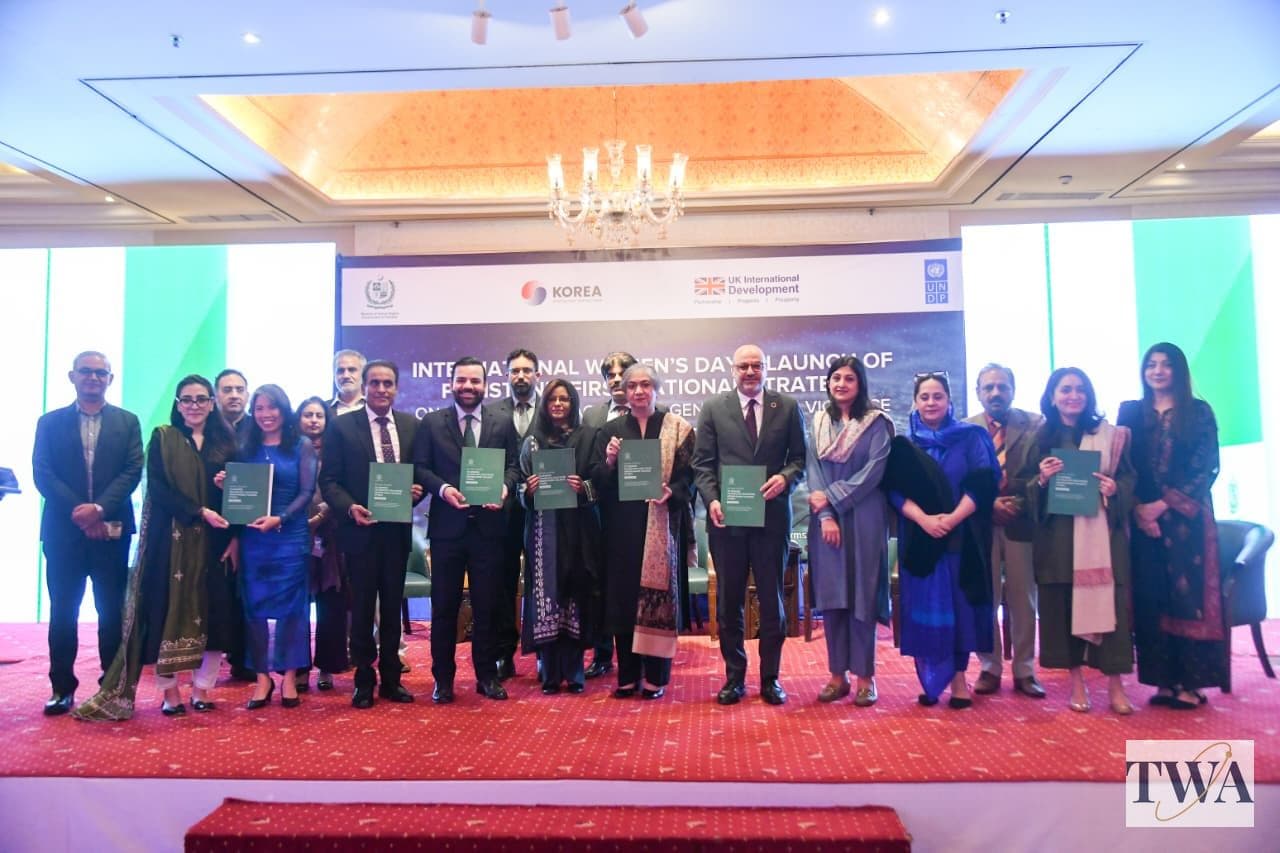
The Ministry of Human Rights Pakistan, in collaboration with the United Nations Development Programme, has launched Pakistan’s first National Strategy on Technology-Facilitated Gender-Based Violence (TFGBV) during a ceremony in Islamabad. The initiative marks a major step toward building a coordinated, survivor-centred and rights-based response to online abuse targeting women and girls.
With digital platforms becoming central to education, work and civic participation, the strategy places digital safety at the forefront of governance priorities. It aims to address rising online threats such as cyberstalking, doxxing, coordinated trolling and AI-generated harassment through stronger prevention measures, improved protection systems and greater institutional accountability.
Speaking at the launch, Barrister Aqeel Malik, Minister of State for Law and Justice, described the strategy as a landmark effort to make digital spaces safer for women. He noted that while Pakistan has strengthened laws against harassment and gender-based violence, the rapid growth of online engagement has introduced new risks that require coordinated institutional action and public awareness.
Secretary of the Ministry of Human Rights Pakistan, Abdul Khalique Sheikh, highlighted the government’s roadmap for implementing the strategy, focusing on enhanced inter-agency coordination and stronger accountability mechanisms to ensure effective enforcement.
Officials also pointed out the widening gap between digital inclusion and online safety. In 2024, around eight million new female users joined the internet in Pakistan. However, the same year saw over 135,000 cybercrime complaints, with only 826 cases reaching prosecution, reflecting a prosecution rate of just 0.6 percent.
Addressing the event, Saba Sadiq, Parliamentary Secretary for Human Rights, emphasized that tackling technology-facilitated violence requires both strong institutions and increased public awareness. She said the strategy will support efforts to empower women and girls to participate safely and confidently in digital spaces.
Meanwhile, Dr. Nafisa Shah, Chairperson of the Gender Mainstreaming Committee of the National Assembly, stressed the importance of strengthening the justice system and ensuring accountability to effectively combat online gender-based violence.
Dr. Samuel Rizk, Resident Representative of United Nations Development Programme, described the initiative as a forward-looking governance reform that embeds safety and accountability into Pakistan’s digital framework. Sam Waldock from the Foreign, Commonwealth & Development Office also highlighted the importance of international cooperation and partnerships to ensure effective implementation.
The launch event included presentations on the national framework, discussions on implementation challenges and a panel featuring representatives from public institutions, oversight bodies and civil society.
As digital technologies become increasingly integrated into daily life, the new national strategy aims to strengthen institutional responses, protect rights and ensure safer digital spaces for women and girls across Pakistan.












Responses (0)