
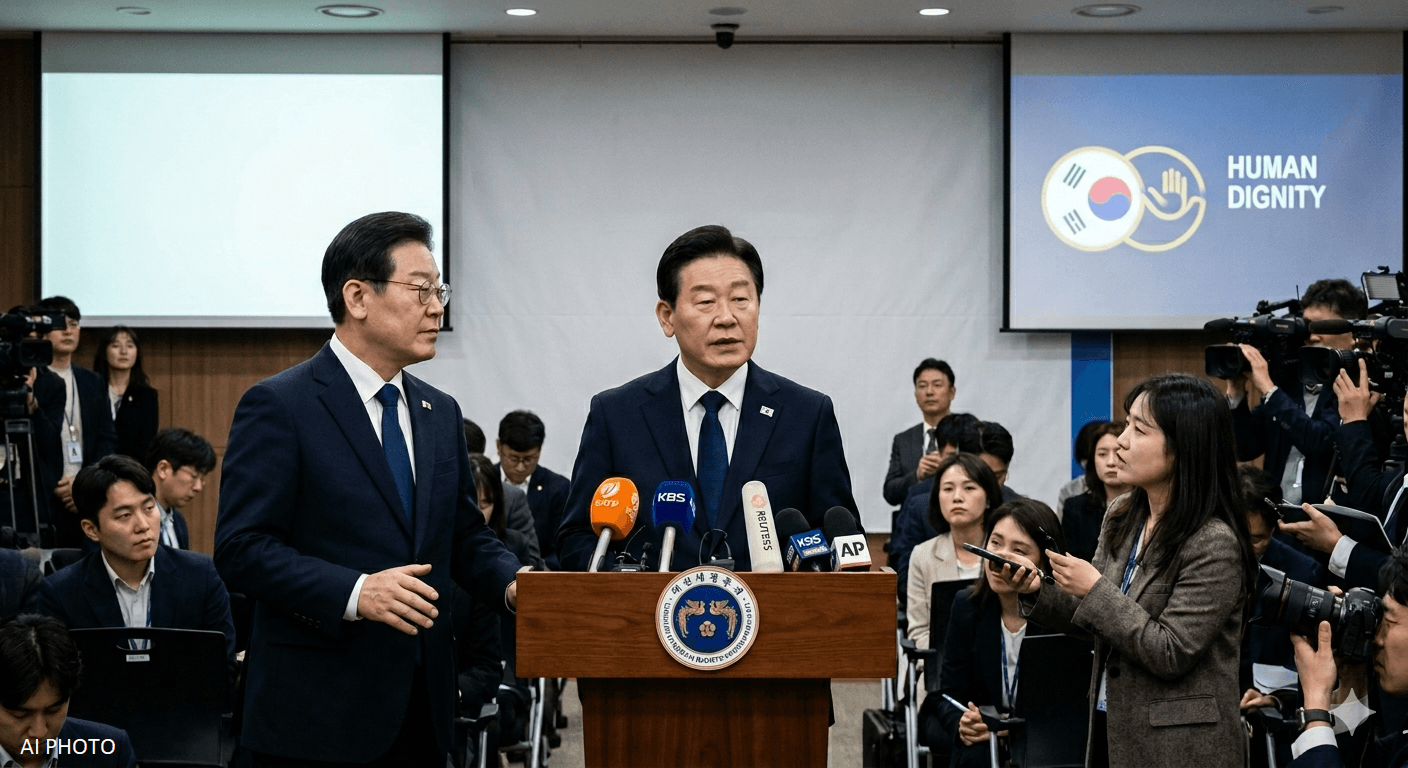
SEOUL — A rare and intense diplomatic standoff has erupted between South Korea and Israel, triggered by President Lee Jae Myung’s recent social media commentary on human suffering and international law. The dispute, which has played out publicly on X (formerly Twitter), centers on the ethical boundaries of warfare and the historical sensitivity of the Holocaust.
The Spark: A Viral Video from the Past
The controversy began when President Lee shared a video—originally from September 2024—showing Israeli soldiers pushing a body off a building in the occupied West Bank. Lee questioned the authenticity of the act and demanded accountability if proven true. However, it was his broader comparison that drew the sharpest reaction. Lee stated there was "no difference" between modern wartime killings, the Holocaust, and the historical suffering of "comfort women" under Japanese colonial rule.
Israel’s Sharp Rebuke
The Israeli Foreign Ministry swiftly condemned the remarks, calling the comparison "unacceptable." Israeli officials accused President Lee of "trivializing" the Holocaust and criticized him for citing a story from 2024 as a current event. They maintained that the specific incident in Qabatya had been investigated two years ago and occurred under "immediate threats" to soldiers' lives.
"Mr. President, it’s always better to check before posting," the ministry stated, adding that the timing—on the eve of Holocaust Remembrance Day—was particularly offensive.
The World Ambassador Perspective: Human Dignity as a Universal Value
President Lee, known for his firm stance on universal rights, refused to back down. He clarified that while the video was from late 2024, its contents remained a violation of international humanitarian law. "Human dignity must be kept as an irreconcilable top priority value," Lee asserted in a follow-up post.
By Sunday, Lee doubled down on his stance, suggesting that respect is earned through respect and that aggressive war must be denied globally. While the South Korean Foreign Ministry attempted to de-escalate the situation by expressing regret over Israel's "misunderstanding" of the President's intent, the rift remains visible.
A Shift in East Asian Diplomacy
Traditionally, South Korea has maintained a balanced and cordial relationship with Israel. This public confrontation signals a potential shift in how East Asian leaders engage with Middle Eastern conflicts, prioritizing "universal human rights" over traditional diplomatic silence.









Responses (0)