
By: Alisha Abid
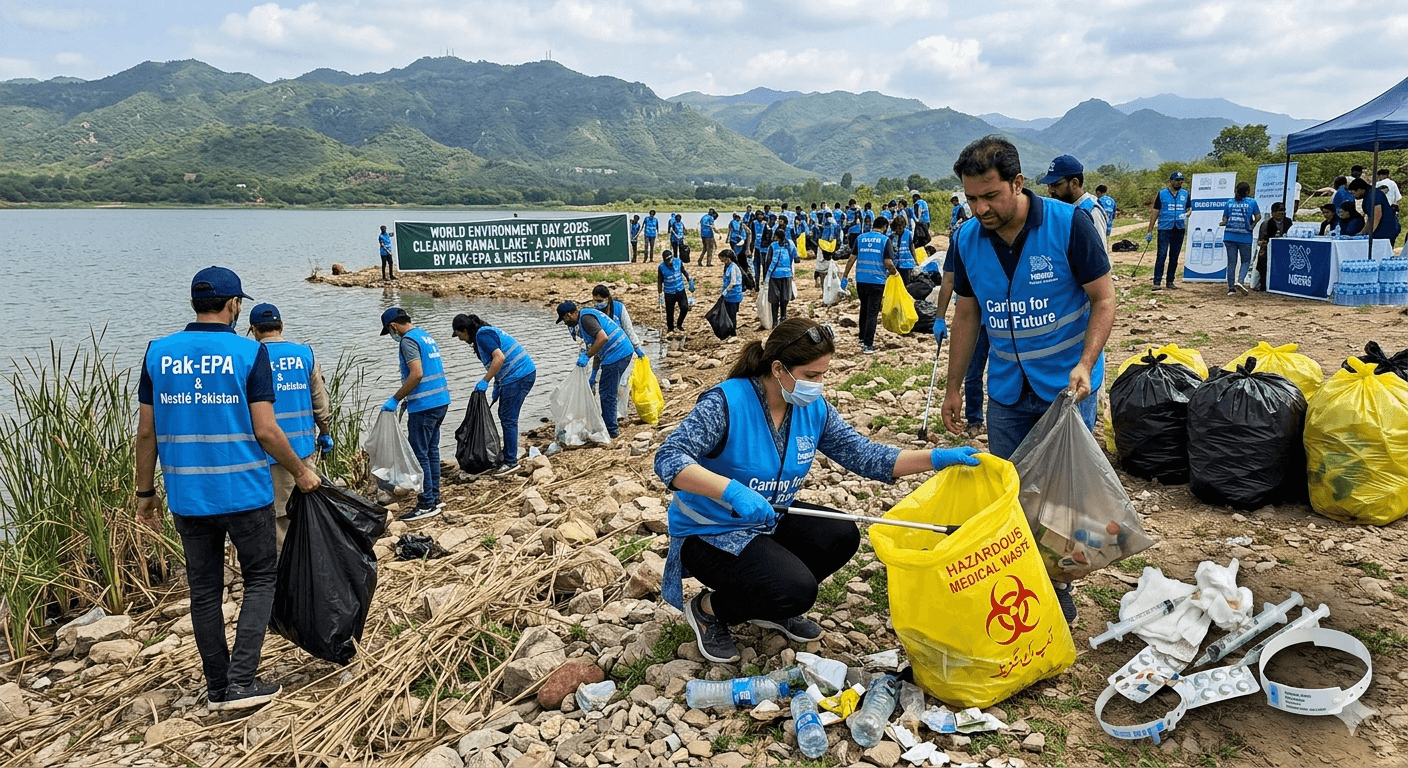
ISLAMABAD, Pakistan — In celebration of World Environment Day 2026, the Pakistan Environmental Protection Agency (Pak-EPA) launched a major freshwater ecosystem intervention at Rawal Lake in Islamabad. Organized in partnership with Nestlé Pakistan and hosted by the Small Dams Department of the Government of Punjab, the flagship event marked the focal point of national Environment Week.
The campaign operated under this year’s global ecological theme: “Inspired by Nature, for Climate, for our future.” The initiative successfully mobilized hundreds of student volunteers, environmental activists, and local community members to clean the capital's critical water reservoir.
Hazardous Waste Discovery Exposes Localized Contamination
While the volunteer groups initially set out to clear surface litter, the clean-up drive quickly exposed deeper environmental dangers threatening the lake. Teams systematically gathered a massive volume of solid waste, uncovering highly hazardous materials including discarded medical syringes, raw hospital waste, and single-use plastics.
The presence of bio-hazardous medical trash along the shoreline highlights the severe, ongoing pollution risks facing the capital's drinking water supply and local wildlife habitats.
Moving From One-Day Campaigns to Permanent Habits
Addressing the participants, the Director General of Pak-EPA issued a direct call to action regarding the state of the capital's natural resources. The DG noted that finding hospital waste and plastics in Rawal Lake serves as a stark warning, urging the younger generation to turn environmental clean-ups into permanent, everyday habits rather than one-day events.
Echoing these thoughts, the Pak-EPA Spokesperson pointed out that human activity has severely contaminated the clean air, water, and soil provided by nature.
Air Degradation: Triggered by expanding brick kilns, unmonitored industrial stacks, open garbage burning, and rising vehicle emissions.
Water Contamination: Driven by industrial effluents and untreated domestic wastewater flowing straight into natural streams.
Soil Toxicification: Worsened by the creation of massive, unregulated dumping sites across municipal areas.
A Long-Term Blueprint for Cross-Sectoral Enforcement
As World Environment Day 2026 approaches, the Rawal Lake operation sets a clear baseline for future environmental policy in Pakistan. Moving forward, Pak-EPA intends to shift from simple public engagement toward decisive regulatory enforcement.
By expanding cross-sector alliances with corporate partners like Nestlé Pakistan and provincial authorities like the Small Dams Department, the agency aims to scale up ecological monitoring. The ultimate goal is to return Pakistan's natural resources to their original, unpolluted state for future generations.









回复 (0)