
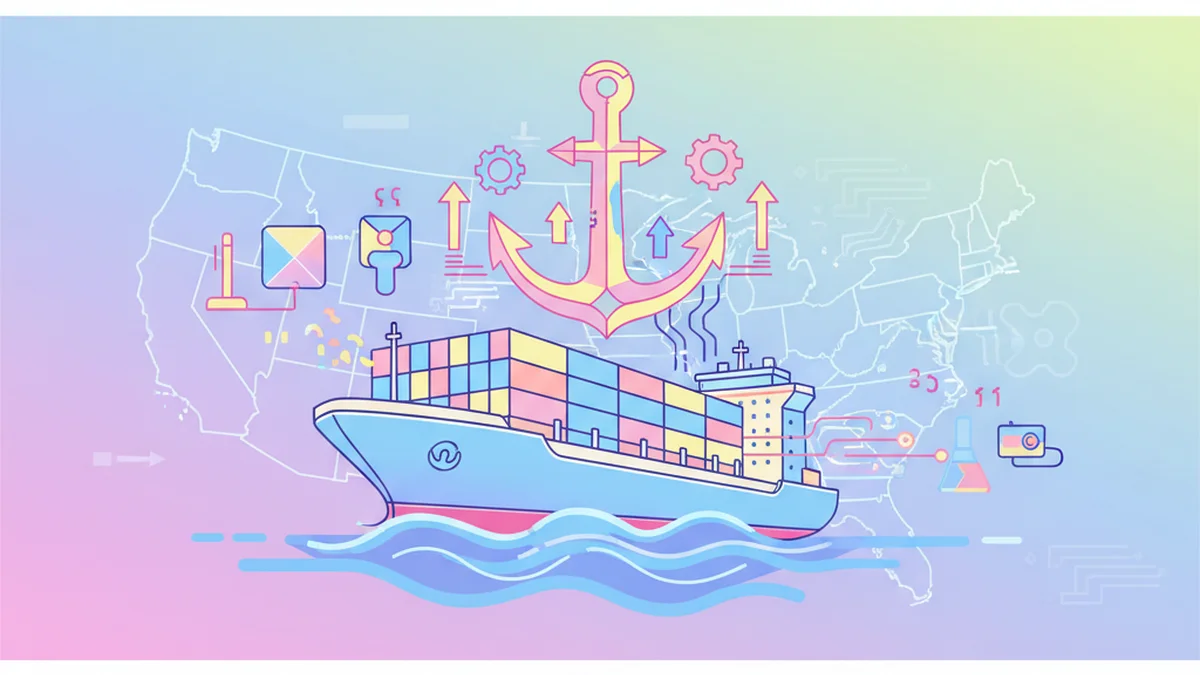
The United States government has initiated a temporary 60-day Jones Act suspension, a move that immediately permits foreign-flagged vessels to transport goods between American ports. This strategic decision aims to enhance the nation's maritime logistical capabilities and ensure supply chain fluidity during a period of heightened global considerations.
What the Jones Act Suspension Means
This temporary measure waives provisions of the Merchant Marine Act of 1920, commonly known as the Jones Act. The original law mandates that all goods shipped between U.S. ports must be carried on American-built, American-owned, American-crewed, and American-flagged vessels.
For the next two months, the Jones Act suspension allows non-U.S. ships to engage in coastal trade, bypassing these strict requirements. Such waivers are typically granted in emergency situations, offering crucial flexibility to the nation's shipping infrastructure.
Strategic Rationale and Economic Impact
The administration cites the need for increased shipping capacity and greater adaptability within domestic supply chains as the primary drivers behind this Jones Act suspension. This action could alleviate potential bottlenecks and ensure the timely delivery of essential commodities across the country. (according to Yonhap News)
While proponents argue it offers immediate economic benefits through potentially lower shipping costs and increased competition, critics often raise concerns about its long-term implications for the American maritime industry and national security. The 60-day duration suggests a targeted, short-term response to specific pressures. (according to Korea Herald)
This limited-time Jones Act suspension underscores a proactive approach to managing national logistics. It provides a window for assessing the agility of U.S. shipping networks in response to evolving domestic and international demands.
Reference: Al Jazeera – Breaking News, World News and Video from Al Jazeera
















جوابات (0)