
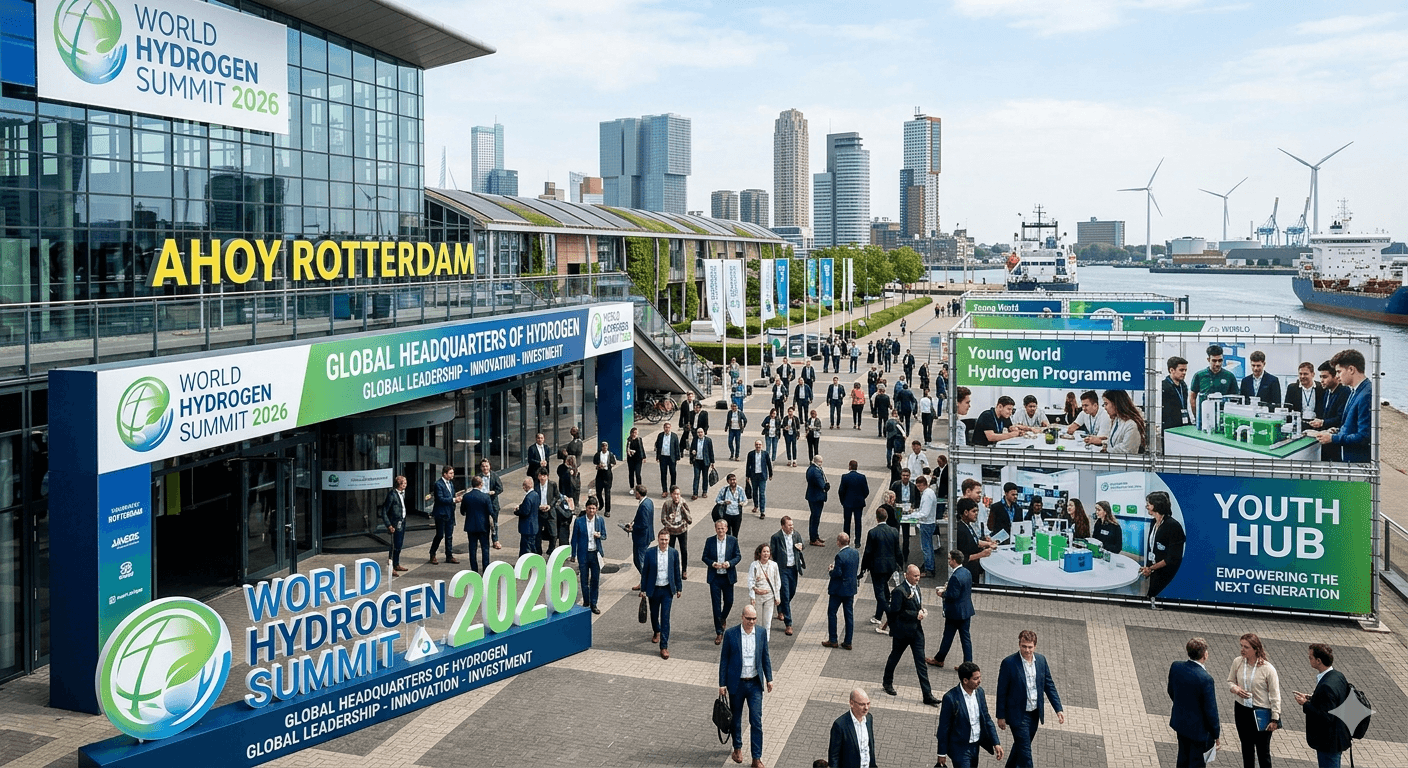
islamabad — As the global race toward Net Zero intensifies, the World Hydrogen Summit 2026 has emerged as the definitive platform for the next era of clean energy. Held in the strategic port city of Rotterdam, this year’s summit has gathered over 15,000 delegates, including energy ministers and CEOs from across the globe, to finalize the transition from fossil fuel dependence to a robust hydrogen economy.
Scaling Green Hydrogen: The Pillar of Sustainability
The central theme of the World Hydrogen Summit 2026 is the industrial-scale deployment of Green Hydrogen. Unlike traditional energy sources, green hydrogen is produced via electrolysis powered by renewable energy, emitting only water vapor. Leaders at the summit are focusing on slashing production costs to make hydrogen a viable competitor to liquid natural gas (LNG) and diesel for heavy industries.
Key milestones discussed at the summit include:
Infrastructure Expansion: The unveiling of the "European Hydrogen Backbone," a dedicated pipeline network connecting supply hubs to industrial centers.
Global Trade Corridors: New bilateral agreements between MENA region producers and European consumers to ensure energy security.
Technological Leap: The debut of high-efficiency electrolyzers that reduce energy consumption by 25% compared to 2024 models.
Economic Impact and Job Creation
The summit isn't just about environmental goals; it is a massive economic engine. Experts at the event predict that the hydrogen sector will generate over 30 million jobs globally by 2030. Financial institutions have used this platform to pledge over $50 billion in new venture capital for hydrogen startups, signaling a strong market confidence in clean tech.
For developing nations, the World Hydrogen Summit 2026 offers a blueprint for "leapfrogging" traditional energy infrastructure. By leveraging abundant solar and wind resources, these regions are positioned to become the new "Energy Superpowers" of the 21st century, exporting clean fuel to the global market.




جوابات (0)