

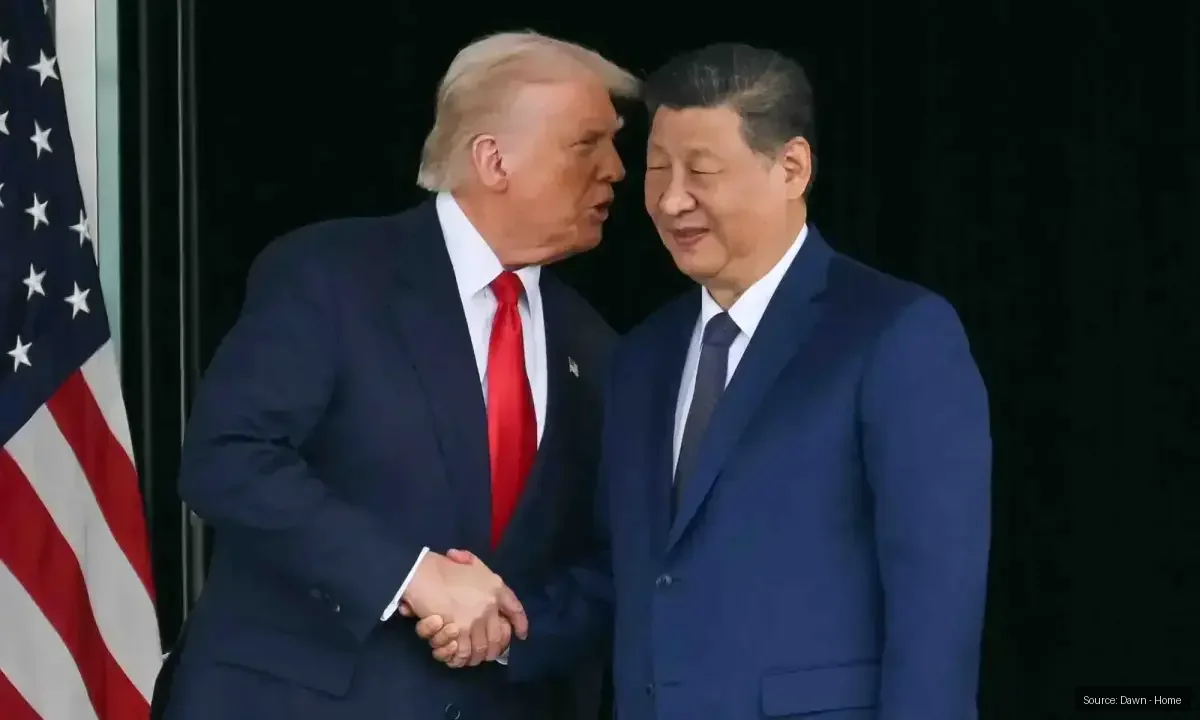
Senior economic officials from the United States and China are currently engaged in critical US-China trade talks in Paris. These discussions aim to resolve ongoing trade disputes and smooth the path for an anticipated summit between US President Donald Trump and Chinese President Xi Jinping scheduled for late March.
US-China Trade Talks: Key Issues on the Table
US Treasury Secretary Scott Bessent and Chinese Vice Premier He Lifeng lead these high-stakes negotiations, joined by US Trade Representative Jamieson Greer and China's trade negotiator Li Chenggang. Their agenda includes examining existing US tariffs, the supply of rare earth minerals and magnets from China, American high-tech export regulations, and Chinese commitments to purchase US agricultural products.
The dialogue commenced Sunday at the Organisation for Economic Cooperation and Development (OECD) headquarters in Paris. Officials anticipate talks will extend into Monday as both delegations work through complex economic issues.
Navigating US-China Trade Tensions and the Path Forward
US Trade Representative Jamieson Greer emphasizes Washington's commitment to fostering a stable bilateral relationship. He states that securing vital rare earth minerals for US industries and ensuring China's continued procurement of American goods are top priorities for the US delegation.
Despite these efforts, analysts suggest the prospects for a significant trade breakthrough in Paris or at the upcoming Beijing summit remain modest. Limited preparation time and Washington's focus on the conflict in Iran, particularly concerning rising oil prices and the Strait of Hormuz closure, are cited as contributing factors.
Adding to the complexity, Bessent and Greer introduce a new "Section 301" investigation targeting China and 15 other trading partners over alleged industrial overcapacity. This probe could potentially trigger additional tariffs within months, a move China has already condemned, reserving its right to implement countermeasures.
China's state-run Xinhua news agency characterizes this round of talks as both an "opportunity and a test." The agency suggests that any progress will largely depend on the US approach during these crucial deliberations.
Source: Dawn - Home








Responses (0)