
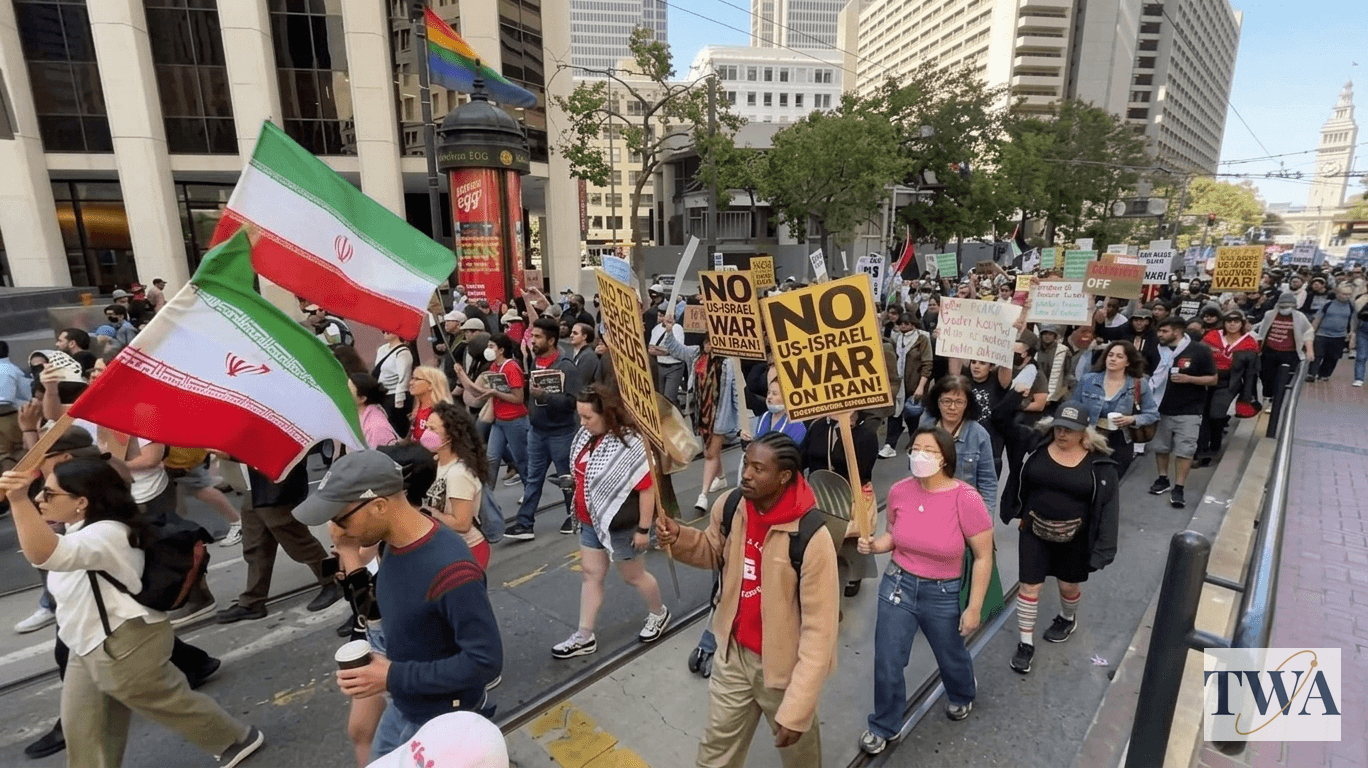
The Middle East is once again standing at a dangerous crossroads as tensions escalate into a major regional conflict. The ongoing confrontation involving Iran, Israel and the United States has moved beyond strategic rivalry and proxy confrontations, evolving into a direct military crisis with far-reaching consequences for the region and the wider world.
At the heart of this unfolding war is a rapidly growing human cost. Civilian deaths, widespread destruction and mass displacement have raised alarm among international observers and humanitarian agencies.
According to international media reports, the conflict intensified in late February 2026, when the United States and Israel launched coordinated air strikes against Iranian targets. These attacks reportedly focused on military bases, missile facilities and locations believed to be connected to Iran’s nuclear programme.
While the strikes were aimed at strategic infrastructure, the impact has extended beyond military installations. Residential neighbourhoods and civilian facilities have also been affected, increasing the humanitarian toll.
Pakistan-based news outlet Aaj English, citing Reuters and other international sources, reported that in the first six days of the conflict at least 1,230 people were killed in Iran, while hundreds more were injured. The figures highlight the intensity of the bombardment and the scale of destruction caused during the early stages of the war.
Similarly, The Indian Express, quoting Reuters, reported that the overall death toll across the region has exceeded 1,340, as retaliatory attacks and cross-border strikes continue to spread across multiple areas of the Middle East.
Reports from Al Jazeera indicate that heavy bombardment has struck several Iranian cities, particularly Tehran and Isfahan, where explosions and air raid sirens have become frequent occurrences. Residential buildings have been damaged, and many civilians have fled affected districts amid fears of further attacks.
According to Al Jazeera correspondents, the most recent wave of strikes on Tehran has been more intense than earlier bombardments, with several neighbourhoods experiencing significant damage. The escalating attacks have heightened concerns that civilian areas are increasingly being caught in the crossfire.
One of the most tragic incidents reported during the conflict occurred in the southern Iranian city of Minab, where a missile strike hit a girls’ school. According to Al Jazeera, the attack killed at least 165 students and staff members, while dozens more were injured.
The incident sparked widespread outrage. Thousands attended funeral ceremonies for the victims, while demonstrations were held in several Iranian cities condemning the attack. International human rights organisations and United Nations experts have called for an independent investigation into strikes targeting schools and other civilian locations.
Meanwhile, Iran has launched retaliatory operations in response to the attacks. According to Al Jazeera, Iranian forces fired missiles and deployed drones targeting Israeli territory and American military facilities across the region.
The conflict has also begun affecting Iran’s neighbouring countries, raising fears that the war could expand into a wider regional confrontation.
In Lebanon, tensions have intensified as clashes between Israel and Hezbollah — a group allied with Iran — continue to escalate. Humanitarian agencies warn that the situation in Lebanon has already displaced thousands of people, creating what the UN refugee agency describes as a major humanitarian emergency.
Neighbouring Iraq has also faced growing instability. Iranian-backed militias and missile attacks have targeted locations hosting US forces, particularly in northern Iraq’s Kurdish region, increasing the risk that Iraq could become another battlefield in the conflict.
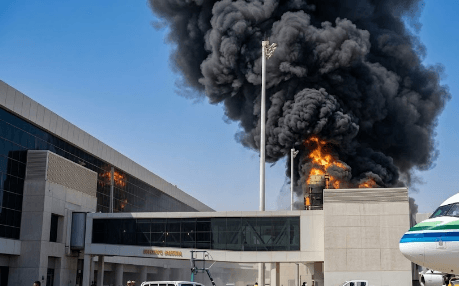
Further north in the South Caucasus, tensions have emerged after Azerbaijan accused Iran of launching a drone strike on an airport in the Nakhchivan region, injuring several civilians. Azerbaijan’s government condemned the incident and warned of possible retaliation, adding another layer of complexity to the already volatile situation.
These developments highlight how quickly the conflict is spilling beyond Iran and Israel, drawing in neighbouring states either directly or indirectly.
The roots of the confrontation lie largely in Iran’s nuclear programme and its expanding geopolitical influence across the Middle East. The United States and Israel argue that Tehran is seeking to develop nuclear weapons, a claim that Iranian officials strongly deny.
Iran insists that its nuclear activities are intended for peaceful purposes such as energy generation and scientific research. Nevertheless, concerns about nuclear proliferation have remained central to regional tensions for years.
Hostility between Iran and Israel stretches back more than four decades. Following the 1979 Iranian Revolution, Iran cut diplomatic ties with Israel and began describing the country as an illegitimate state. Israel, in turn, considers Iran one of the most significant threats to its national security.
Over time, this rivalry evolved into a prolonged shadow conflict involving covert operations, cyber attacks and proxy wars across several Middle Eastern countries.
The United States has played a crucial role as Israel’s closest strategic ally. Washington has consistently supported Israel’s security through military assistance and diplomatic backing while also imposing economic sanctions on Iran.
However, analysts warn that if the conflict continues to escalate, its consequences could extend far beyond the region.
One of the most significant concerns involves the Strait of Hormuz, a vital maritime route through which a large portion of the world’s oil supply passes. The ongoing confrontation has already disrupted shipping routes and energy markets, raising fears of a global economic shock if the strait becomes fully blocked.
Beyond economic consequences, the war is also triggering a humanitarian crisis. Thousands of civilians have reportedly been displaced from their homes across parts of Iran and neighbouring countries as the violence intensifies.
History shows that regional conflicts can quickly spiral into wider wars if diplomatic efforts fail. The First World War itself began as a limited regional dispute before expanding into a global catastrophe.
Today, the international community faces a similar dilemma: whether the crisis can be contained through diplomacy or whether it will continue to escalate into a broader regional war.
What remains clear is that in conflicts like these, the greatest suffering is borne by ordinary civilians — people who have little influence over geopolitical decisions yet face the most devastating consequences.
And as the Iran-Israel-US confrontation intensifies, it is once again the lives of ordinary people across the Middle East that are paying the highest price.










Responses (0)