


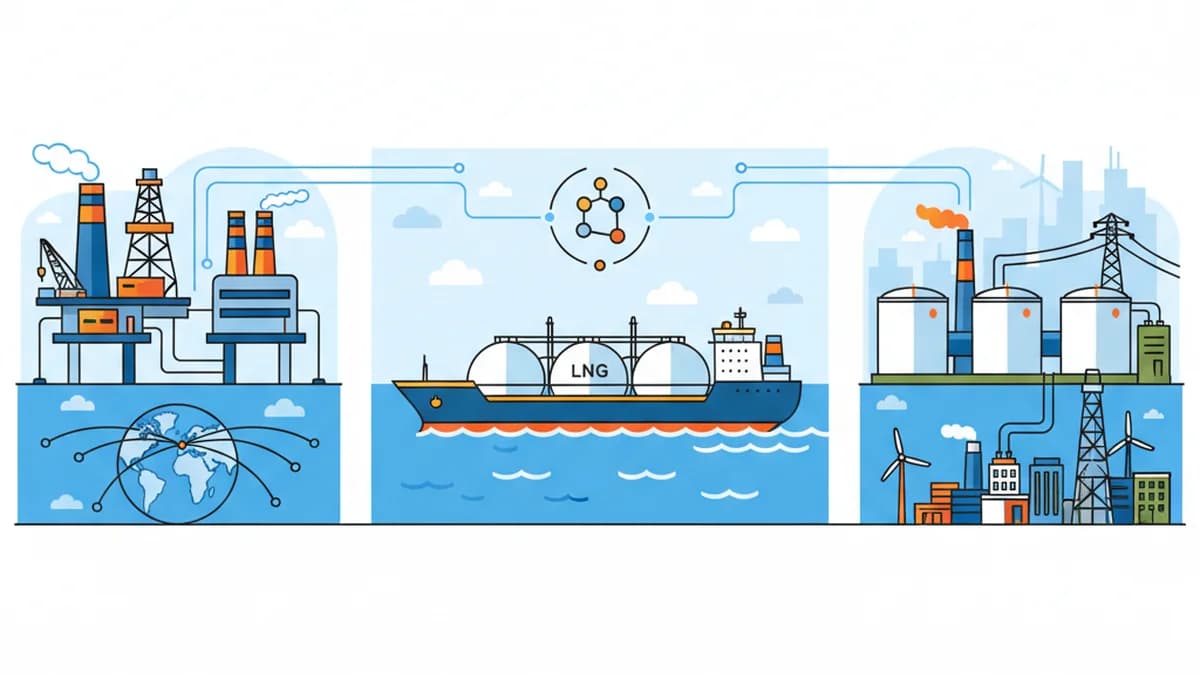
LNG, or Liquefied Natural Gas, stands as a cornerstone of global energy supply, currently powering a significant portion of the world's electricity and industrial needs. This crucial fuel navigates complex international routes, with nearly one-fifth of all global LNG shipments transiting through the strategically vital Strait of Hormuz.
Its unique properties allow for efficient transport across vast distances, making it indispensable for countries seeking diverse energy sources. As the world increasingly relies on natural gas, the role of LNG in securing energy stability continues to grow.
What Exactly is Liquefied Natural Gas (LNG)?
LNG is natural gas that has been cooled to approximately -162 degrees Celsius (-260 degrees Fahrenheit), transforming it into a clear, colorless, and non-toxic liquid. This liquefaction process significantly reduces its volume, making it easier and more economical to store and transport across oceans where pipelines are not feasible.
During liquefaction, impurities such as water, carbon dioxide, and other hydrocarbons are removed, resulting in a cleaner fuel. Once it reaches its destination, LNG is regasified back into its gaseous state for distribution via pipelines to homes, businesses, and power plants. (according to Reuters)
The Global Significance of LNG Supply
The demand for LNG has surged as nations seek to reduce reliance on coal and diversify their energy portfolios. It serves multiple critical functions, from generating electricity to fueling industrial processes and even powering heavy-duty transportation. Its flexibility allows it to bridge supply gaps and provide energy security to importing nations. (according to BBC News)
Key maritime choke points, like the Strait of Hormuz, highlight the geopolitical importance of LNG trade. The smooth passage of tankers through such straits is vital for global energy stability, underscoring the interconnectedness of energy markets and international shipping lanes. The continued expansion of liquefaction and regasification infrastructure is shaping the future of global energy distribution.
Reference: Al Jazeera – Breaking News, World News and Video from Al Jazeera











Responses (0)