


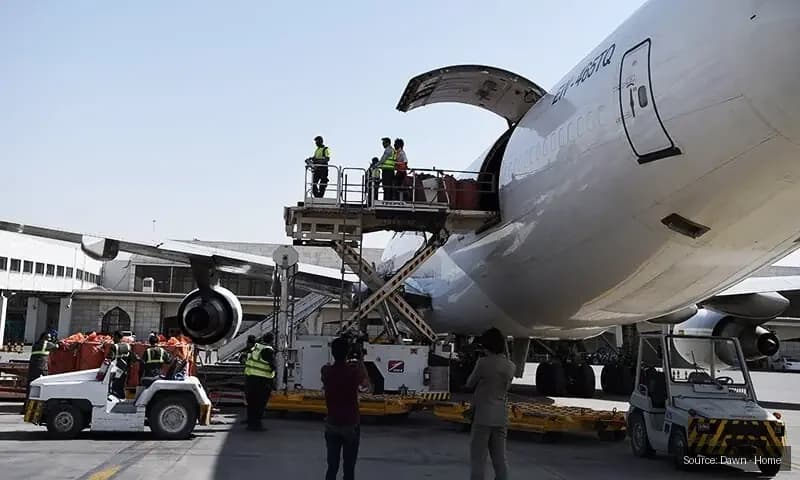
Pakistani exporters are currently facing significant new financial pressures as two major ground handling companies implement unexpected 'ad hoc charges' on air cargo shipments. This development exacerbates an already challenging environment for the export sector, which struggles with elevated war risk premiums and freight costs stemming from ongoing geopolitical instability.
Gerry’s dnata Pakistan has introduced an additional charge of Rs50 per kilogram, exclusive of taxes, for export cargo. This fee is collected from the party presenting the cargo at their warehouse, with shippers required to provide NTN or CNIC details upon acceptance.
Similarly, Menzies Ras Pakistan has imposed an 'ad hoc operating charge' of Rs25 per kilogram on export cargo, also excluding applicable taxes, effective March 17. Both companies cite escalating fuel prices and a significant rise in overall operational and supply chain costs as the primary drivers for these new charges.
New Ad Hoc Charges Spark Industry Outcry
The Air Cargo Agents Association of Pakistan (ACAAP) has voiced strong opposition to the sudden imposition of these fees, particularly from Gerry’s dnata. ACAAP states that the Rs50 per kilogram charge was implemented without any prior consultation with industry stakeholders.
In response, ACAAP issued an advisory on March 12, instructing its members to temporarily halt the deposit of export cargo at Gerry’s warehouses. The association also recommended that members refrain from booking cargo with airlines handled by Gerry’s dnata, including major carriers such as DHL, Saudia, Emirates, and Turkish Airlines, until the matter achieves a resolution.
Customs Intervenes on Shipping Line Fees
Meanwhile, the Collectorate of Customs (HQ) Exports is actively addressing numerous complaints from traders regarding the imposition of various ancillary charges by shipping lines and their agents. These representations highlight concerns over non-transparent and potentially opportunistic pricing practices.
The Collectorate issued a directive instructing shipping lines, carriers, and their agents to immediately cease such non-transparent practices and refrain from imposing excessive charges amidst the prevailing geopolitical situation. Customs specifically noted reports of war risk or emergency conflict surcharges being applied retroactively to consignments that had already departed or were in transit prior to the escalation of hostilities on February 28.
Officials emphasize that the retroactive billing of surcharges on cargo already in transit before February 28 is unjustified and demands immediate corrective action. These war risk and emergency conflict surcharges typically range between $3,500 and $4,000 per twenty-foot equivalent unit, depending on the specific shipping line involved.
Reference: Dawn - Home












Responses (0)