


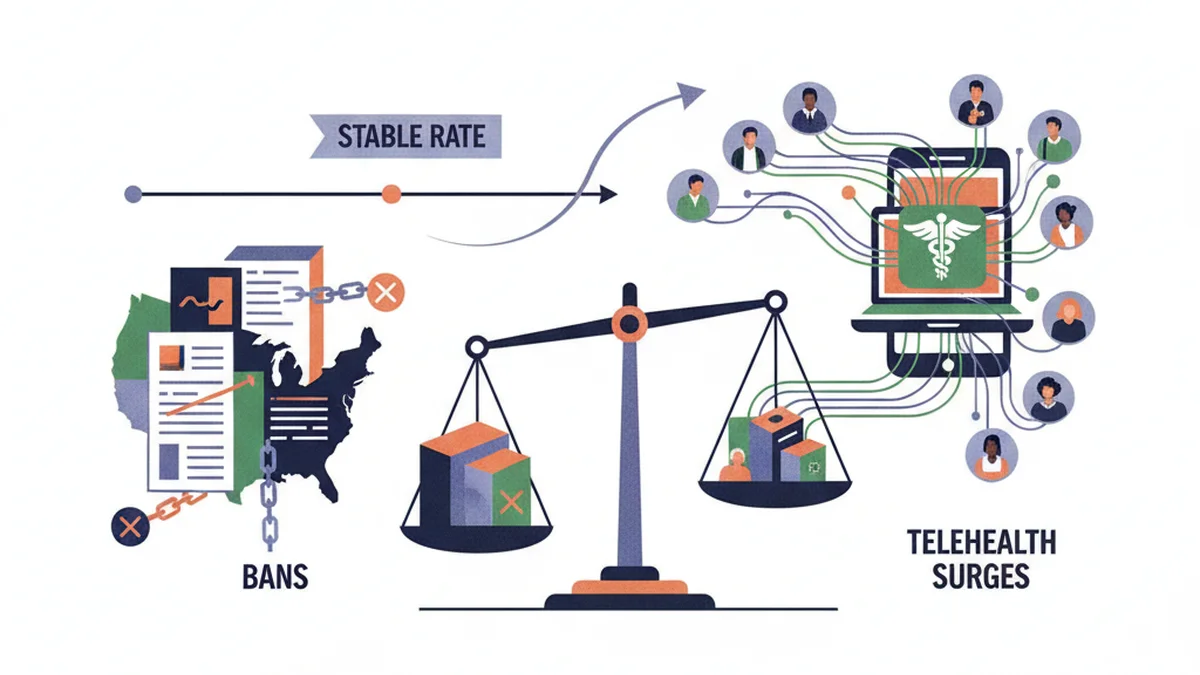
The US abortion rate has remained largely unchanged, new findings reveal, despite numerous states enacting total or partial bans on the procedure. This stability is primarily attributed to increased patient travel across state lines and a significant expansion of telehealth services, which increasingly allows access without extensive travel.
Telehealth and Interstate Access Evolve
A recent analysis highlights a notable shift in how individuals access abortion services. While interstate travel to states with legal protections remains a factor, there is an increasing reliance on remote healthcare solutions and mail-order medication, reducing the need for physical travel in some cases.
This evolving trend indicates that telehealth and mail-order options are playing a crucial role in maintaining access to care. They provide alternative pathways that help mitigate the impact of geographical and regulatory barriers. (according to Reuters)
Regulatory Review of Abortion Medication Continues
Concurrently, US regulatory bodies are assessing potential modifications to how mifepristone, a key abortion medication, can be distributed. This review holds significant implications for future access to medication abortion. (according to BBC News)
However, reports indicate that officials have postponed a decision on these changes until after the upcoming midterm elections. This delay comes amidst widespread public support for abortion access across the United States, influencing the political landscape surrounding reproductive rights.
Reference: World news | The Guardian















Responses (0)