



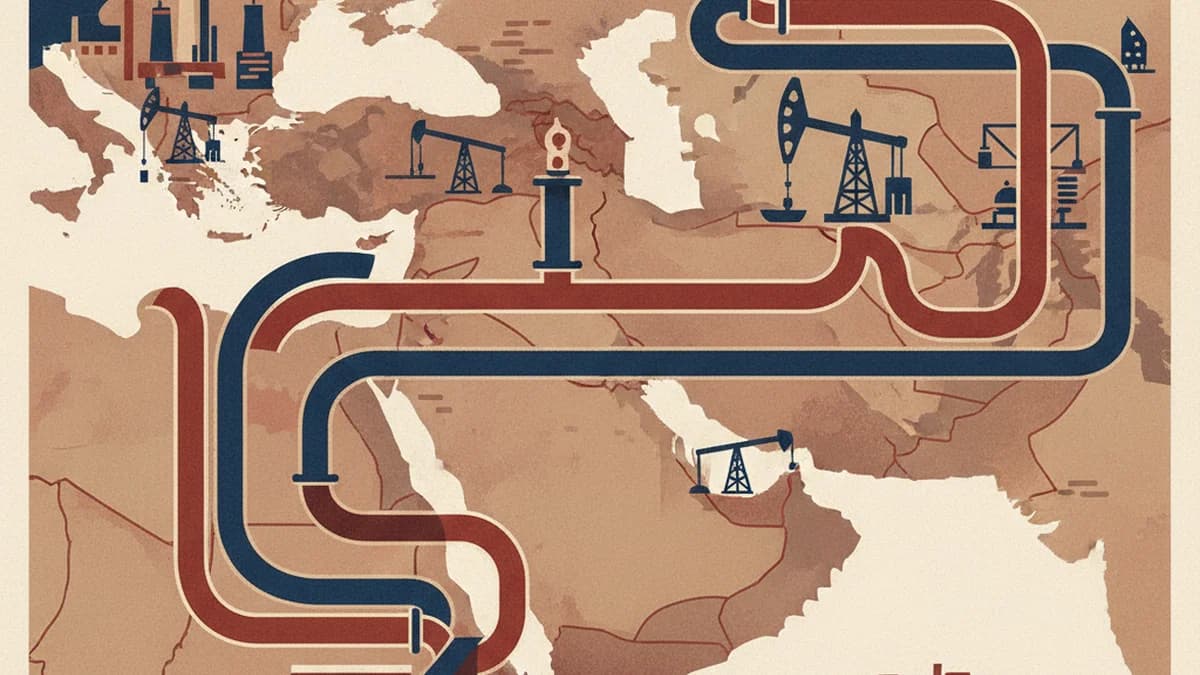
Middle Eastern nations are actively expanding their Middle East oil pipelines to offer crucial alternative export routes. This strategic move aims to circumvent the highly sensitive Strait of Hormuz, bolstering regional energy security and ensuring uninterrupted global supply.
Bypassing the Strategic Strait of Hormuz
The Strait of Hormuz, a narrow choke point connecting the Persian Gulf and the Gulf of Oman, remains critical for a significant portion of the world's seaborne oil shipments. Its geopolitical sensitivity has long prompted concerns about potential disruptions to global energy markets and supply chains.
Consequently, several oil-producing countries in the region are investing heavily in overland infrastructure. These new and expanded pipeline networks offer a direct path to ports located outside the strait, mitigating transit risks.
New Routes, Enhanced Security
Saudi Arabia, for instance, operates the East-West Pipeline, also known as the Abqaiq-Yanbu pipeline, which transports crude oil to the Red Sea. This allows for significant quantities of oil to bypass the strait entirely.
The United Arab Emirates also utilizes the Habshan-Fujairah pipeline, delivering crude oil to its terminal on the Gulf of Oman coast. This route provides a direct alternative to shipping through the Strait of Hormuz. (according to BBC UK)
Iraq, a major oil exporter, is also exploring and enhancing its pipeline capabilities. Efforts include optimizing routes towards Turkey and potentially other exits, further diversifying its export options away from the Persian Gulf. (according to The Guardian UK)
These Middle East oil pipelines collectively provide a significant increase in capacity, allowing producers to maintain export volumes even if shipping through the Strait of Hormuz faces challenges. This strategic diversification is pivotal for maintaining stability in volatile international energy markets.
The ongoing development and expansion of these alternative oil routes underscore a proactive approach by Middle Eastern states to secure their vital energy exports against geopolitical uncertainties. This strategic pivot promises greater resilience for the global energy supply chain.
Reference: Al Jazeera – Breaking News, World News and Video from Al Jazeera












Responses (0)