

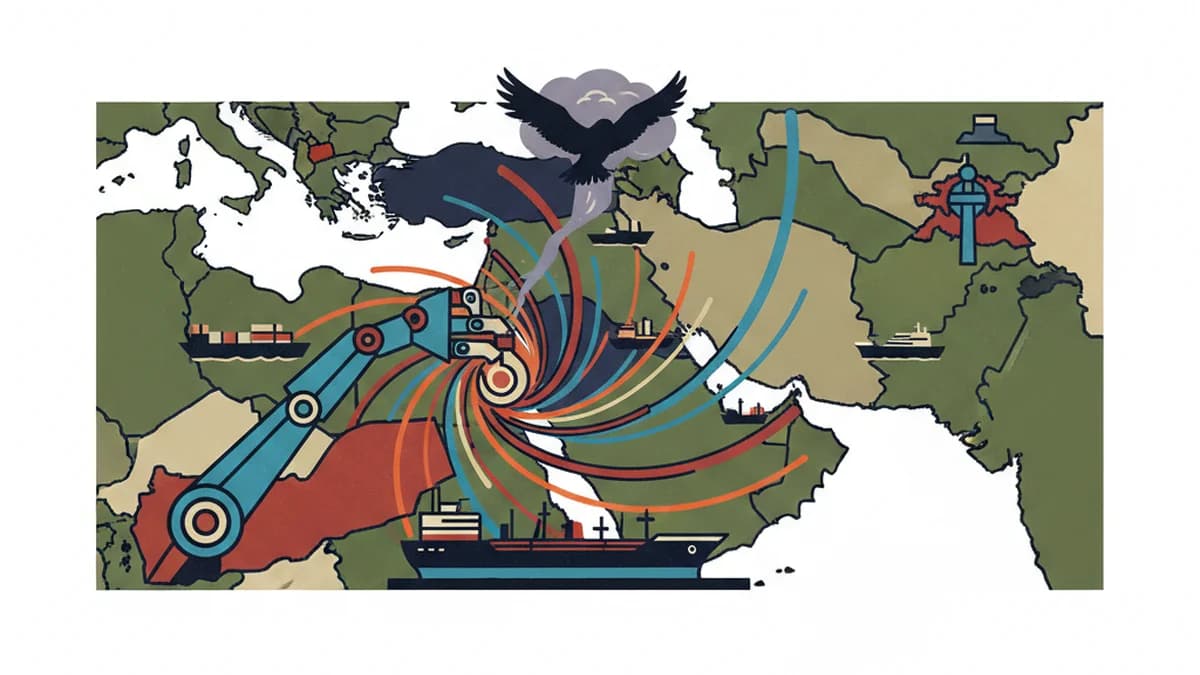
The ongoing Middle East conflict has taken a perilous turn as Houthi forces in Yemen initiate missile attacks targeting Israeli military sites. This intervention marks a significant expansion of the broader confrontation involving the United States, Israel, and Iran, raising serious concerns about regional stability and the global economic outlook.
Reports confirm that the Houthi movement has launched missiles, directly impacting Israeli military installations. This development introduces a new dimension to the already volatile situation, signaling a dangerous widening of hostilities.
Escalation Deepens the Middle East Conflict
This entry by the Houthi forces into the active combat zone represents a critical escalation. It brings with it the tangible threat of increased damage to the global economy, potentially disrupting vital shipping lanes and energy markets.
Observers are closely monitoring the situation, noting that the expansion of the US-Israeli-Iranian confrontation now directly incorporates additional regional actors. The immediate consequence is a heightened risk of a broader, more devastating regional war. (according to Reuters)
Diplomatic Initiatives Confront Significant Hurdles
In response to the intensifying crisis, Pakistan announces its intention to host a critical meeting of Middle Eastern powers on Monday. The aim is to forge a unified regional approach to de-escalate and ultimately end the hostilities. (according to BBC News)
The scheduled talks will convene the foreign ministers of Saudi Arabia, Turkey, and Egypt. However, a notable absence from these discussions includes any of the primary warring parties, which casts considerable doubt on persistent claims by the United States regarding diplomatic progress.
The complexity of the current Middle East conflict underscores the urgent need for inclusive dialogue. Without direct engagement from all involved factions, efforts to achieve a lasting resolution face formidable obstacles.
Reference: World news | The Guardian








Responses (0)