Ladakh Gains Distinct Identity: 'Ladakh' to Replace 'Occupied Jammu & Kashmir' on Official IDs
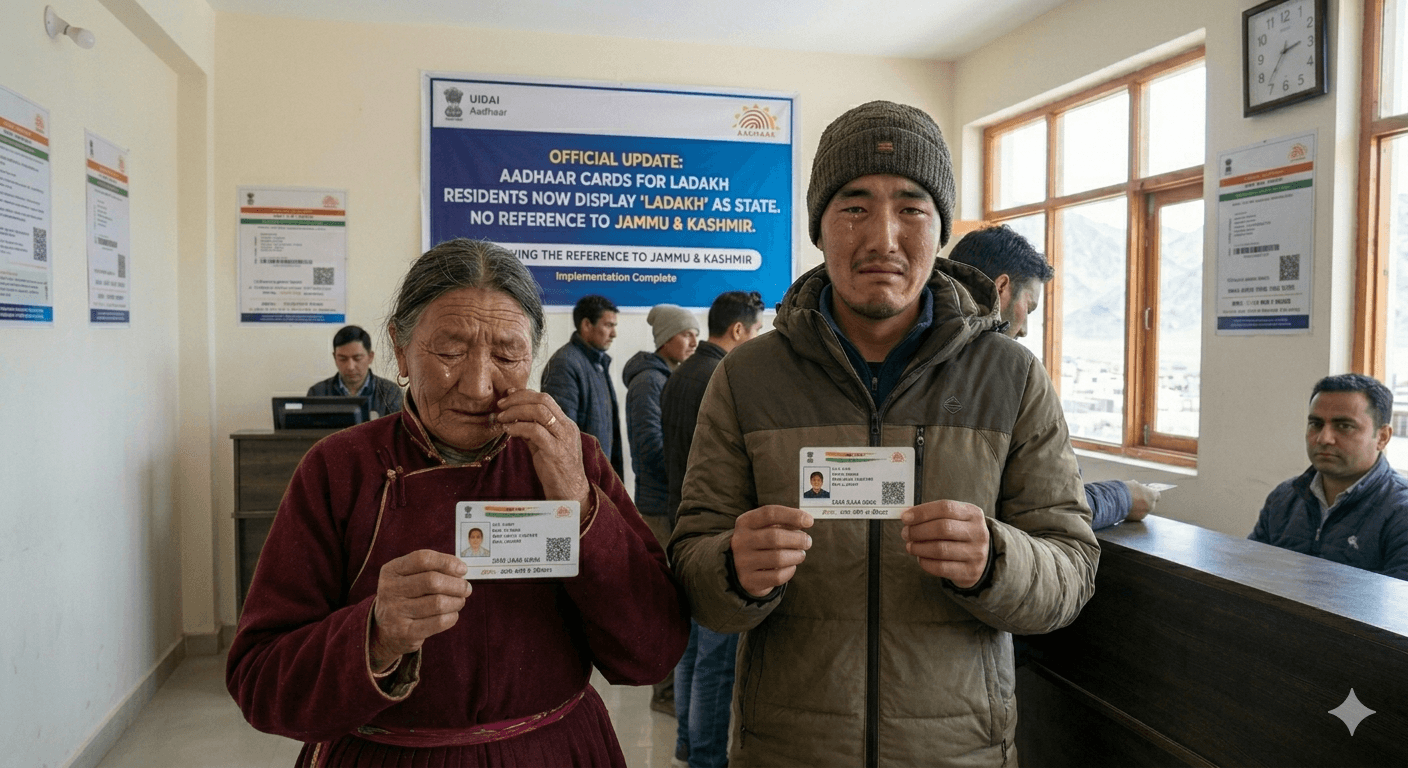
LEH / SRINAGAR — In a move with significant administrative and political implications, residents of the high-altitude region of Ladakh will no longer be identified as residents of Occupied Jammu & Kashmir on their official documents. On Monday, the Unique Identification Authority of India (UIDAI) updated its central database, ensuring that the "State" field on Aadhaar cards for the region's inhabitants now officially reads "Ladakh."
This administrative shift marks a departure from the previous system where the region was digitally tethered to the broader territory of Occupied Jammu & Kashmir. While local leaders in Ladakh have welcomed the clarity, the decision has sparked a heated debate regarding the cultural and geographical unity of the region.
Personal Intervention and Technical Resolution
The Ladakh Administration confirmed that this long-standing discrepancy was resolved following the personal intervention of Lieutenant Governor V.K. Saxena. Prior to this update, residents faced persistent technical hurdles:
Despite using Ladakhi pin codes, the automated system defaulted to Occupied Jammu & Kashmir.
This error caused delays in accessing localized government benefits and verifying residency for regional employment.
Automatic Integration: The UIDAI has applied these changes globally across its database, meaning residents do not need to visit enrollment centers for the update to take effect.
Political Backlash: A "Conspiracy of Division"
While the move is celebrated in Leh as a step toward administrative autonomy, it has been met with fierce opposition in Jammu. The Shiv Sena (UBT) unit characterized the update as a calculated strike against the historical integrity of the region.
"The government is drawing psychological lines on paper to divide people who have lived together for centuries," stated Manish Sahni, President of the J&K unit. He argued that the shared trade and cultural heritage of Occupied Jammu & Kashmir and Ladakh should not be erased by a bureaucratic stroke of a pen.
Reaction from Regional Leadership
Major political parties within Occupied Jammu & Kashmir have voiced similar concerns, viewing the change through a lens of political fragmentation:
National Conference: Alleged that the government is focusing on "symbolic identity shifts" to avoid addressing the core demand for the restoration of democratic rights and full statehood.
PDP: A spokesperson for Mehbooba Mufti’s party claimed that the move aims to deepen the geographical and emotional distance between the people of the three sub-regions.
Background: The 2019 Reorganization
The administrative split follows the August 2019 decision to revoke Article 370, which resulted in the separation of Ladakh from Occupied Jammu & Kashmir, placing it under the direct control of New Delhi. Although this ID update fulfills the legal requirements of that separation, Ladakh’s political leadership continues to push for full Statehood and constitutional protections for their land and jobs.








جوابات (0)