



By: ABID SIDDIQUE CHAUDHRY
Whenever the world’s oldest universities are mentioned, names like Oxford, Cambridge, or the University of Bologna in Italy usually come to mind. However, the historical reality is far older and much more astonishing. The world’s first formal, degree-granting university was neither built in Europe nor funded by the royal treasury of a mighty empire; rather, it was founded in the ninth century CE by a visionary Muslim woman using her own personal wealth.
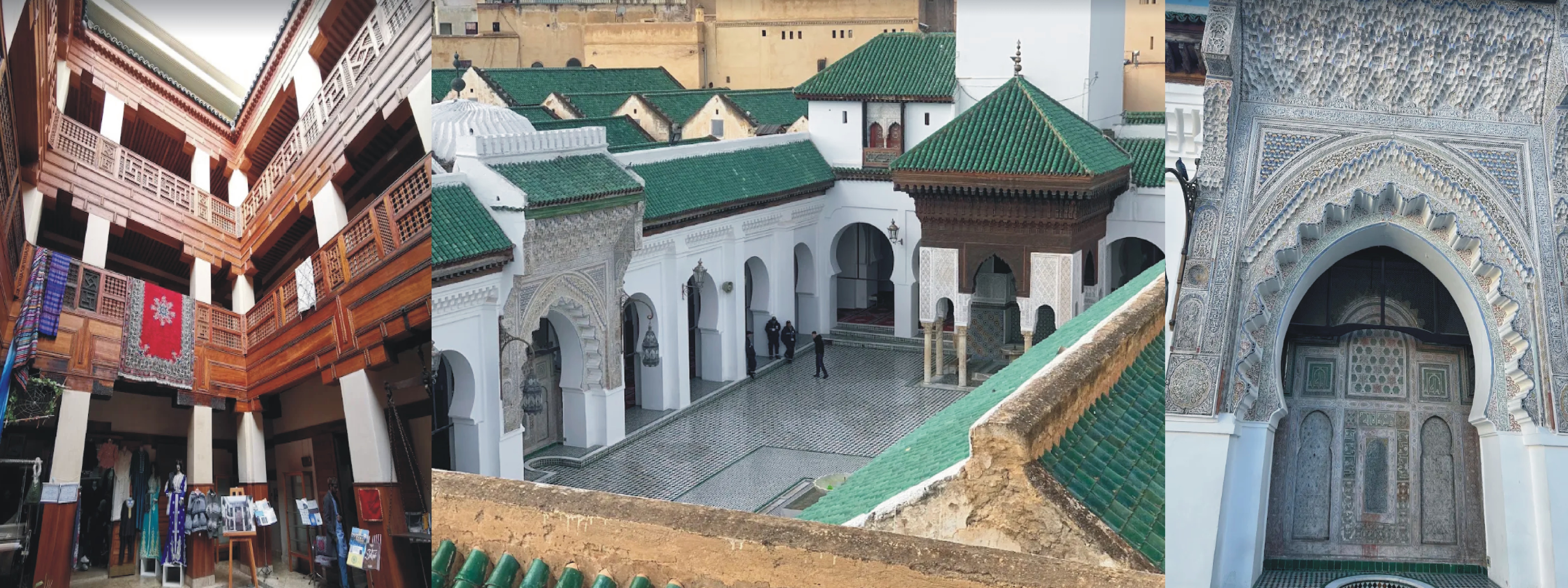
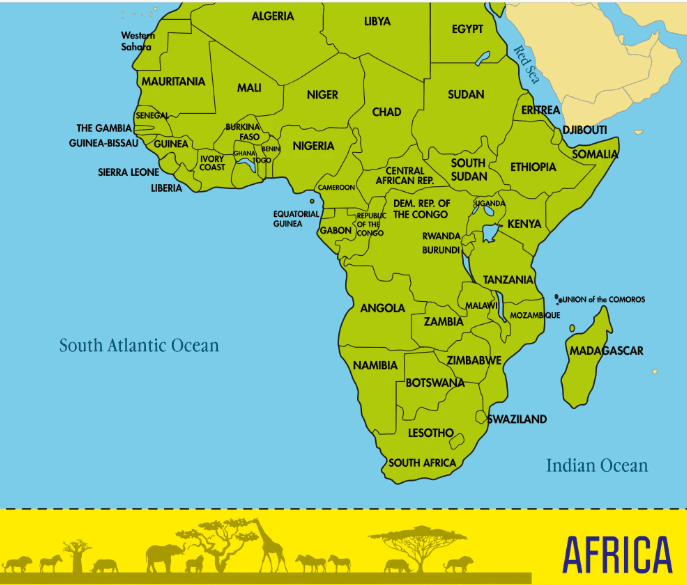
This oldest and continuously operating university in the world was established in the historic city of Fez, Morocco, and is known as the University of al-Qarawiyyin. According to Guinness World Records and UNESCO, it is the world’s first degree-granting university that remains active today without interruption.
A Remarkable Woman and a Historic Feat: Fatima al-Fihri

At the dawn of the ninth century CE, a wealthy merchant named Muhammad al-Fihri migrated with his family from the city of Kairouan in Tunisia to settle in Fez, Morocco. Following his passing, his daughters, Fatima al-Fihri and her sister Mariam, inherited a substantial fortune.
Mariam used her share of the inheritance to build a magnificent mosque in the city (the Andalusian Mosque), while Fatima al-Fihri harbored an even grander vision. She understood that the foundation of a thriving society is not laid merely with brick and stone, but with education. She dedicated her entire life savings to constructing a grand center of learning that could serve as a cradle of knowledge for both local residents and students traveling from afar.
Historical accounts state that Fatima al-Fihri laid the foundation of this historic institution in 859 CE (245 AH) and fasted continuously from the first day of construction until its completion to ensure the purity and sincerity of her intention. Because her family hailed from Kairouan, the institution was named "al-Qarawiyyin."
From Mosque to University: The World’s First Formal Education System
Initially founded as a place of worship, the institution swiftly evolved into the largest intellectual and scholarly hub of the Islamic world. Instruction here was not limited to religious studies; contemporary sciences were also formally taught.
Comprehensive Curriculum: Alongside the Quran, jurisprudence (Fiqh), Hadith, and Arabic language and literature, the University of al-Qarawiyyin taught major scientific disciplines such as mathematics, astronomy, medicine, chemistry, history, and geography.
The World’s First Degree (Ijazah): For the first time in history, this university introduced a system of awarding formal certificates to students after evaluating their academic proficiency. Known in Arabic as an "Ijazah," this practice became the foundational concept behind the modern university degree.
Al-Qarawiyyin’s Indelible Mark on the Global Educational Landscape
During the Middle Ages, while Europe was mired in intellectual darkness, al-Qarawiyyin served as the greatest bridge of knowledge and wisdom between Europe and the Islamic world. Students traveled from distant lands to pursue their studies within its walls.
Historical evidence indicates that in the tenth century CE, Pope Sylvester II studied mathematics and astronomy at this very university, later introducing Arabic numerals and the concept of "zero" to Europe. Furthermore, the world’s greatest historian and sociologist Ibn Khaldun, the philosopher Ibn Rushd (Averroes), and the renowned geographer al-Idrisi were all associated with this historic institution.
Its library still ranks among the oldest rare-book repositories in the world, housing ninth-century manuscripts of the Holy Quran written on parchment and gazelle skin, as well as the original manuscript of Ibn Khaldun’s famous work, Al-Muqaddimah.
Historical Comparison: Other Ancient Universities of the World
To truly appreciate how ancient al-Qarawiyyin is, it helps to look at other historic centers of learning across the globe:
Taxila (Modern-day Pakistan): Established around 600 BCE, though it was not a structured institution—rather a collection of individual scholars' circles—and was destroyed in the fifth century CE.
Nalanda (India): Founded in the fifth century CE, but ceased to exist following invasions in the twelfth century.
University of al-Qarawiyyin (Morocco): Founded in 859 CE (recognized by UNESCO and Guinness World Records as the world’s oldest continuously operating university).
Al-Azhar University (Egypt): Established in 970 CE (roughly 111 years after al-Qarawiyyin).
University of Bologna (Italy): Founded in 1088 CE, officially recognized as the oldest university in Europe.
The University of al-Qarawiyyin is not merely the name of a building or a seminary; it is a timeless symbol of the determination, sacrifice, and foresight demonstrated by one woman—Fatima al-Fihri—more than twelve hundred years ago. The endorsement of Guinness World Records and UNESCO stands as proof that this institution is an invaluable heritage of human history that gifted the world a formal education system and the academic degree. It reminds us how the lamp of knowledge is lit, and that when intentions are pure, even the tides of time yield to reshape history.












جوابات (0)