


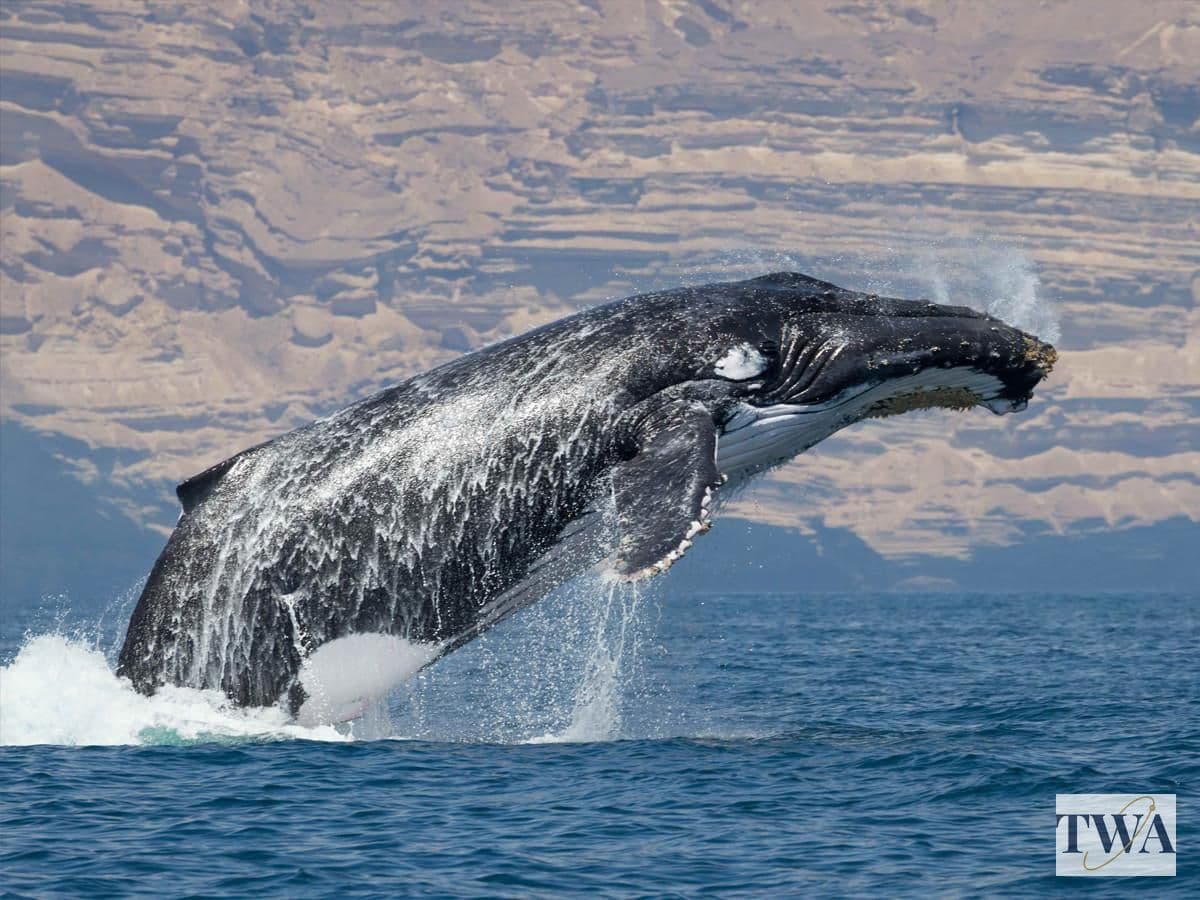
Artificial intelligence, satellites, drones and underwater sensors are changing how scientists protect the world's largest mammals. While many people associate the International Whaling Commission (IWC) with regulating whaling, today's IWC has evolved into a global platform that promotes advanced technologies for whale conservation, marine research and ocean sustainability.
For Pakistan, this technological transformation presents an opportunity to strengthen marine conservation in the Arabian Sea.
Pakistan's Hidden Marine Treasure
Pakistan's coastline stretches for more than 1,000 kilometres along the Arabian Sea, home to blue whales, Bryde's whales, sperm whales, dolphins and the endangered Arabian Sea humpback whale.
Although Pakistan is not a member of the IWC, its waters form part of the range of one of the world's rarest whale populations. Through WWF-Pakistan and regional scientific partnerships, Pakistani researchers have contributed valuable information on whale sightings, fishing interactions and marine biodiversity.
AI Is Revolutionising Whale Research
Traditional whale surveys relied on research vessels and visual observations, making them expensive and time-consuming.
Today, artificial intelligence can analyse thousands of satellite images, underwater sound recordings and drone photographs in hours instead of months. AI systems can automatically identify whale species, estimate population sizes, detect migration routes and even predict areas where whales are at risk of becoming entangled in fishing gear.
For Pakistan, AI could help monitor its vast Exclusive Economic Zone more efficiently while reducing the cost of marine surveys.
Satellites Are Watching the Ocean
Modern satellite technology allows researchers to monitor sea-surface temperatures, plankton blooms and shipping routes—factors that influence where whales feed and travel.
Satellite telemetry, in which temporary tracking tags are attached to whales, enables scientists to understand migration routes and identify habitats that require protection. The IWC Scientific Committee has specifically encouraged expanding satellite telemetry studies across the Arabian Sea, including waters connected to Pakistan.
Drones Improve Whale Health Assessments
Unmanned aerial vehicles (UAVs), commonly known as drones, are becoming indispensable tools for marine scientists.
Flying safely above whales, drones can measure body condition, identify scars from fishing gear or ship strikes, photograph calves and estimate population health without disturbing the animals.
The IWC has recommended wider use of UAVs to monitor the endangered Arabian Sea humpback whale population.
Listening to Whales with Underwater Sensors
Whales communicate across vast distances using low-frequency sounds.
Passive acoustic monitoring uses underwater hydrophones to detect whale calls day and night, even when animals cannot be seen. These systems help scientists determine migration timing, habitat use and population distribution.
The IWC recommends expanding passive acoustic monitoring throughout the Arabian Sea, including regions connected to Pakistan, to improve understanding of this endangered whale population.
Digital Mapping to Reduce Bycatch
One of the greatest threats to whales in Pakistan's waters is accidental entanglement in gillnets.
WWF-Pakistan has established a crew-based observer programme that records whale sightings and fishing interactions. Building on these data, the IWC has recommended combining information on Pakistan's fishing fleet with satellite-derived whale distribution models to identify high-risk areas where conservation measures can reduce bycatch.
The Future of Marine Technology in Pakistan
Pakistan is expanding its digital capabilities in artificial intelligence, remote sensing, geospatial technologies and satellite applications. These same technologies can support marine conservation by:
Using AI to identify whales from drone and satellite imagery.
Deploying underwater acoustic sensors to detect whale calls.
Using GIS to map whale habitats and fishing activities.
Applying satellite data to monitor climate impacts and marine ecosystems.
Using machine learning to predict whale migration and reduce ship-strike and bycatch risks.
Why This Matters
The future of whale conservation is increasingly driven by technology rather than traditional fieldwork alone. AI, drones, satellites, underwater sensors and big-data analytics are giving scientists unprecedented insight into marine ecosystems.
For Pakistan, participating in international discussions led by organizations such as the IWC can help connect local research with global scientific innovation. It also demonstrates how emerging technologies can protect biodiversity, strengthen sustainable fisheries and support the country's growing blue economy.












جوابات (0)