

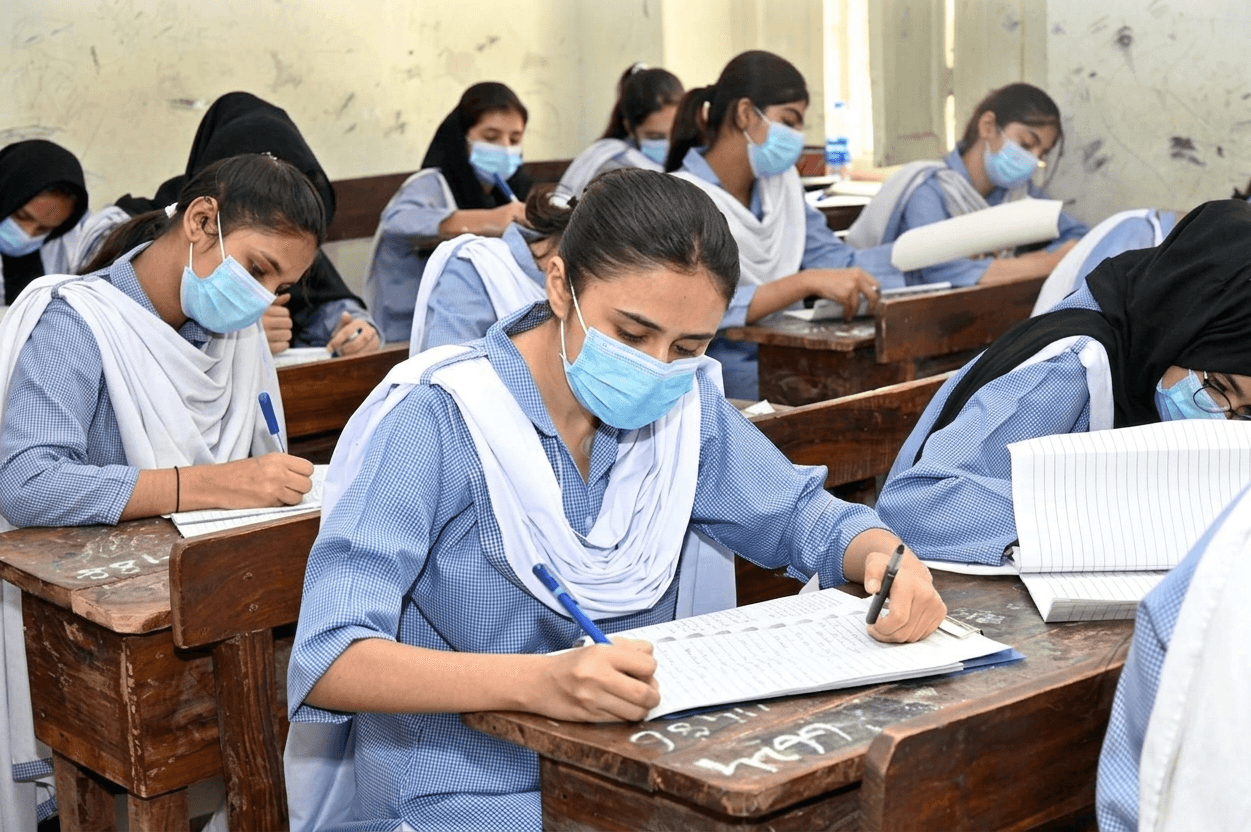
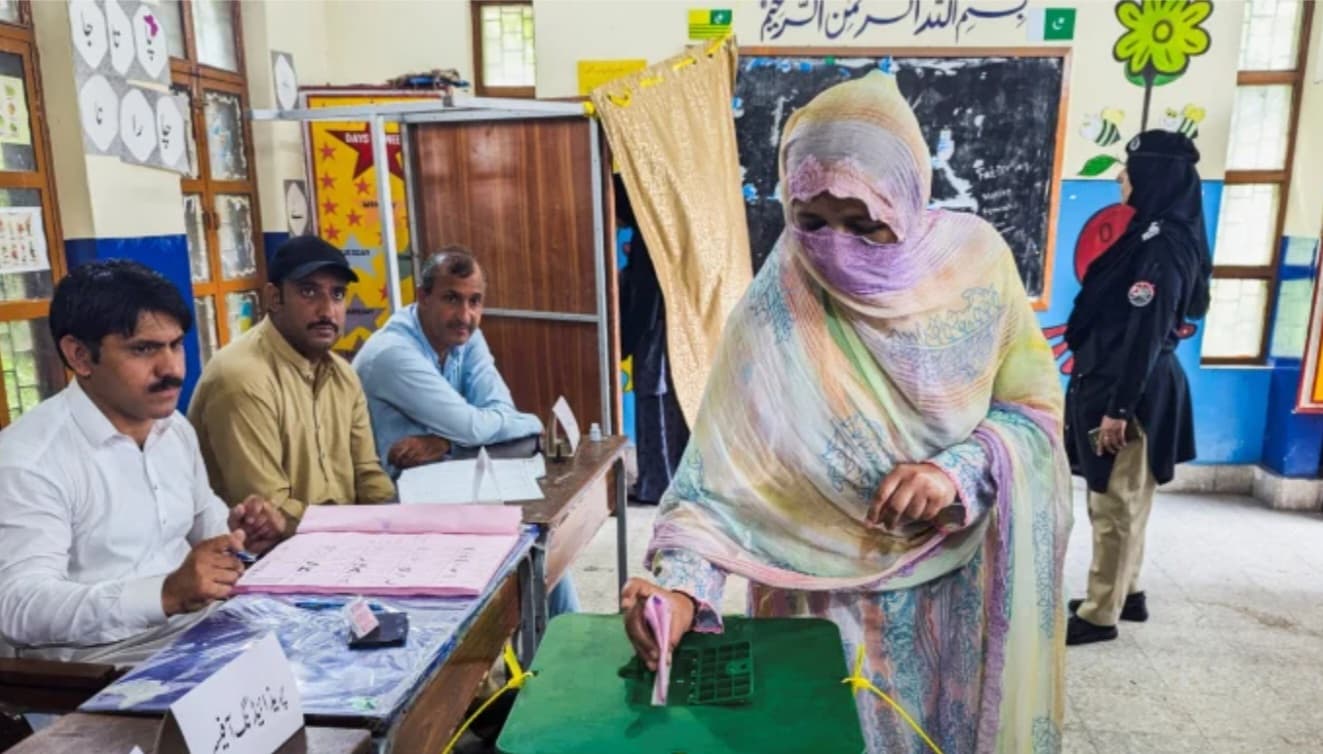
When the Swat Board released its matriculation results on the morning of 5 August, the first three lines of the merit list gave readers pause. Sohana Ahmad topped with 1,161 marks, Roshni followed with 1,158, and Zalanda Sardar took third with 1,156. All three were girls. So were the three toppers in the science group. In humanities, the honours went to Javeria Shah, Yusra Bibi and Nayab Rahmat — again all girls, all private candidates, and all from Shangla, the poorest and least accessible of the three districts under the board’s jurisdiction.
This is not coincidence but pattern, and the numbers insist on it. Of 46,484 candidates, 36,639 passed, an overall rate of 78.82 per cent. Look inside that figure and the picture changes. Among regular science candidates, boys passed at 79.33 per cent and girls at 88.83 — a gap of more than nine points. In humanities the split was 60.96 against 52.17. Among private candidates it repeated itself: 76.76 per cent for young women, 62.28 for young men. Government or private, science or arts, regular or external — every cell of the table tilts the same way. This is not one school’s performance; it is a consistent signature running through the whole system.
Nor is it confined to Swat. The same week, the Peshawar Board recorded 80.44 per cent for regular female candidates against 67.56 for males — nearly thirteen points. At Mardan, all three science positions went to students of the Girls Cadet College. Abbottabad’s top slots in both groups also went to young women. No major board in Khyber Pakhtunkhwa stands outside the trend.
Here an honest pause is necessary, because to file this away as “a victory for girls” would misread the data. According to the 2023 digital census, Swat district alone has 294,320 children aged five to sixteen out of school — 114,918 boys and 179,386 girls. Province-wide the figure approaches 4.9 million. A girl who reaches the examination hall has passed through a brutally fine sieve: her family sent her despite distance, custom, cost and social pressure. The pool of boys is far wider and far less selected. Statisticians call this selection bias, and it explains a substantial share of the gap. Part of what looks like female advantage is in fact a reflection of female deprivation.
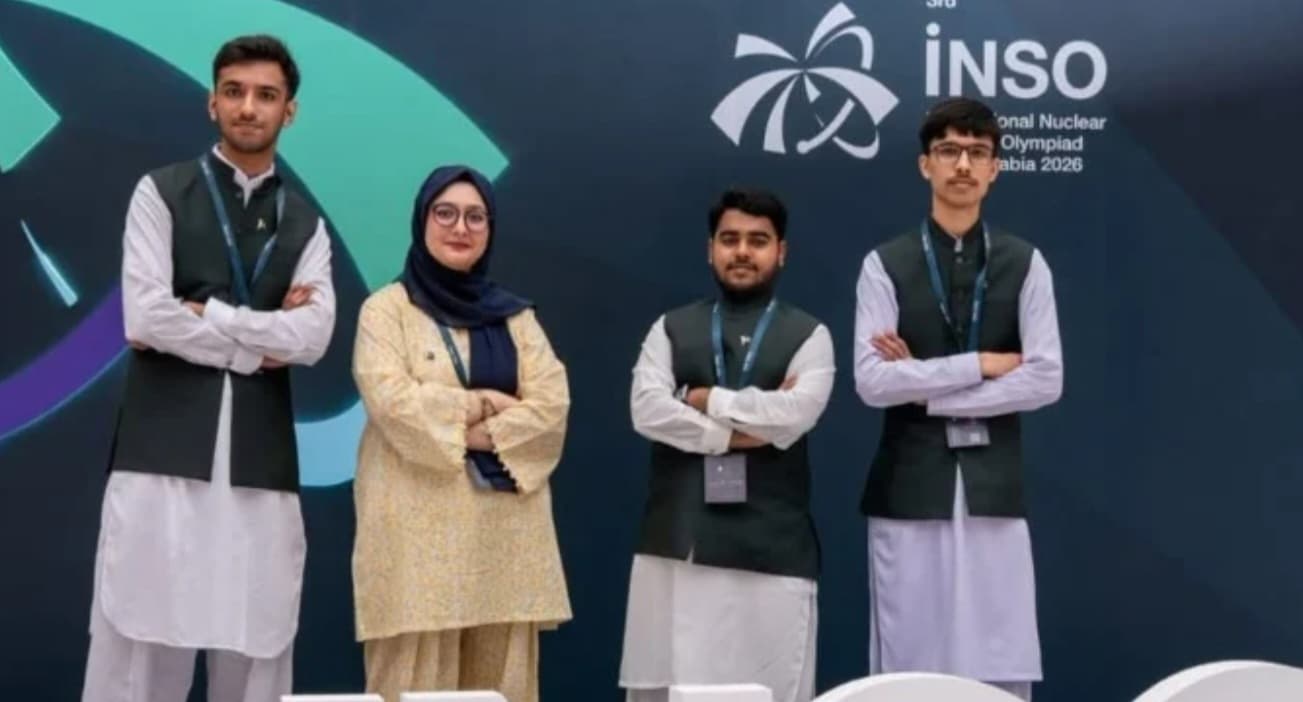
Read More : Pakistan wins three medals at International Nuclear Science Olympiad
But selection bias is not the whole story. Were it a statistical mirage, the pattern would not repeat across the world. UNESCO’s Leave No Child Behind reports 140 million boys out of school globally — more than girls — and finds boys more likely to repeat a grade in 130 of 142 countries. In OECD’s PISA 2022, girls outscored boys in reading by an average of 24 points in every participating country except Chile and Costa Rica. Women now make up 57.3 per cent of American graduates. In Britain, only 14 per cent of working-class boys reach higher education against 22 per cent of their female peers. Swat is not an exception; Swat has arrived on a global curve.
So what is happening to our sons? The most immediate factor is the attention economy. DataReportal puts Pakistan’s internet users at 117 million and social media identities at roughly 80 million — and that access is sharply gendered. Around 76 per cent of Facebook users and 64 per cent of Instagram users in Pakistan are male. The handset, the data package and the unsupervised hour largely belong to boys. PISA quantifies the cost: students distracted by devices in most of their mathematics classes scored 15 points lower, close to three-quarters of a school year. Those limiting recreational screen time to an hour a day finished some 49 points ahead of peers spending five to seven. The capacity to sit with a book for three unbroken hours has become a rare skill — and it survives best in the group with the fewest phones.
Which leads to an uncomfortable truth. In most households across Swat, Buner and Shangla, a boy’s day is divided among the hujra, the bazaar, the cricket ground, the hotel and the workshop, while a girl’s remains inside four walls. She therefore has more hours to study. This is not a happy fact. It is the unintended dividend of confinement, and presenting it as a formula for success would be foolish. But analytical honesty requires naming it.
The second factor is economic incentive, and it is perhaps the least discussed. The Labour Force Survey 2024-25 puts unemployment in Khyber Pakhtunkhwa at 9.6 per cent, the highest in the country, rising to 12.5 among those aged fifteen to twenty-four. Malakand’s economy rests on tourism, transport, hotels, retail and remittances. A fifteen-year-old looks around and sees a cousin earning three months’ income in the Kalam or Malam Jabba season, or sending money home from the Gulf, without any certificate at all. For him, an extra year of schooling carries a visible opportunity cost. For his sister the calculation inverts: with female labour force participation near 24 per cent nationally, education is not primarily a route to employment but the only legitimate door to standing, selfhood and a measure of mobility. When there is only one door, one knocks with everything one has.
Read More : Pakistan Ambassador Dr. Asima Rabbani Hosts Dinner for Philippine Senator Robin Padilla to Strengthen Ties
The third factor is a supervision vacuum. Malakand is migration country; in thousands of homes the father is in Karachi or the Gulf, and the adolescent son becomes head of the household before his time — heavy on responsibility, light on oversight. One of PISA 2022’s clearest findings is that stronger performers came from homes where families ate together and asked how the day had gone. Supervision here means presence, not severity — and daughters get more of it than sons.
The fourth factor is the school system itself, and here responsibility rests with adults, not children. The Pakistan Institute of Education’s Public Financing in Education 2025-26 records that 77 per cent of the country’s ten-year-olds cannot read and understand a simple passage; that education spending has fallen from 1.9 per cent of GDP in 2019-20 to a provisional 0.8 per cent in 2024-25, against a UNESCO benchmark of four to six; and that roughly 94 per cent of the education budget goes to salaries. In such a system, classroom quality depends almost entirely on the individual teacher. And because our schools are segregated by sex, weak discipline, poor attendance or thin instruction in a boys’ school never gets averaged out against a girls’ school. It appears undiluted in the results.
The fifth factor is cultural. UNESCO states plainly what many societies practise: academic effort is treated as incompatible with manliness, and the boy who studies invites the mockery of his peers. Add the collapse of reading as a habit — the towns of Swat and Buner have few libraries, and those that exist stand empty — and the outcome writes itself.
Geography adds a further layer: mountain roads, winter closures, scattered settlements, the legacy of the 2007-09 insurgency that destroyed hundreds of schools, and floods that damaged close to half the country’s public schools. Yet the contrast within the province is striking. Upper Chitral keeps its out-of-school rate near 10 per cent while districts of Kohistan reach 79. Governance, investment and local attitude clearly outweigh terrain. Which is precisely why those three private candidates from Shangla are living proof that poverty need not be destiny, given resolve and a little support.
What, then, are the long-term consequences? The gravest risk is a double loss. On one side, a growing cohort of educated women enters an economy that absorbs barely a quarter of them; the IMF estimates Pakistan forfeits close to 30 per cent of GDP to this exclusion. On the other, under-schooled young men enter the labour market with limited productivity. We are failing to deploy the talent we have trained and failing to train the talent we deploy. For human capital, no combination is worse. The social consequences follow: in every society, aimless and unemployed young men are the easiest recruits for narcotics, crime and extremism. An educational imbalance of this scale will also strain the marriage market.
This cannot become a contest of daughters against sons — in UNESCO’s phrase, it is not a zero-sum game. Bringing boys back must not, and need not, come at any girl’s expense. Several steps are immediately available.
Parents should treat a son’s schooling with the seriousness already extended to a daughter’s, fix a nightly cut-off for the phone, and spend five minutes a day asking what was taught.
Schools should timetable a weekly reading period, run remedial classes in basic literacy and numeracy, train teachers in classroom management, and keep phones out of the room —while heeding the OECD’s warning that prohibition alone does not teach self-regulation; that must be taught.
Policymakers should require boards to publish annual results disaggregated by sex, school and tehsil so weakness can be located; build a district-level early warning system for dropouts; raise education spending steadily toward 4 per cent of GDP; and run technical training linked to tourism, construction and IT alongside matriculation, so that no boy is forced to choose between learning and earning.
Communities hold the strongest card. The hujra, the mosque and the jirga remain Swat’s most effective institutions. Should they place boys’ attendance and study on their agenda, no government campaign could match them.
The achievement of Sohana, Roshni and Zalanda, and of Shangla’s Javeria, Yusra and Nayab, requires neither explanation nor apology. It is the yield of pure effort, and all of Malakand should be proud of it. The real question lies elsewhere: with the thousands of boys who sat the same examination and fell behind, and with the 114,000 in Swat district alone who never reached the hall at all. No society can educate half its young and expect whole development. The merit list is not telling us who won. It is telling us who left the field — and that is by far the more important news.









Responses (0)