


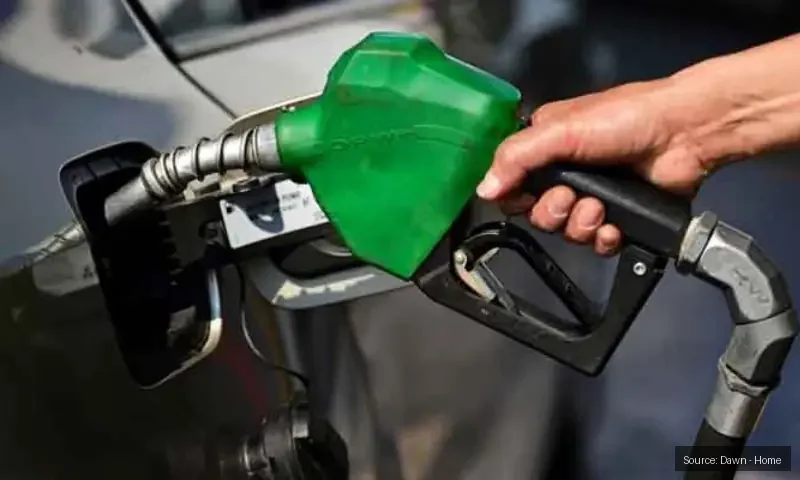
Pakistan's government implements a significant kerosene price hike, increasing its cost by Rs40 per litre. This decision comes as authorities opt to maintain the prices of petrol and high-speed diesel, cushioning consumers from even steeper increases through a substantial subsidy package.
Steep Kerosene Price Hike Impacts Consumers
The recent adjustment elevates kerosene, often termed the 'poor man's fuel,' to Rs358 per litre, making it the most expensive consumer fuel product. This marks a 12.6 percent rise on March 14 alone, contributing to a staggering 90 percent cumulative increase since early March from Rs188.87.
Just last week, the price of kerosene saw a nearly 70 percent jump, moving from Rs130.08 to Rs318.81 per litre. Kerosene serves vital roles, providing energy to remote households without access to liquefied petroleum gas (LPG) cylinders.
However, its lower cost previously led to illicit mixing with petrol for profiteering. The current kerosene price hike significantly narrows this price gap, aiming to curb such practices.
Billions Allocated to Stabilize Broader Fuel Costs
To prevent sharp rises in petrol and high-speed diesel, the government has approved a Rs23 billion price differential subsidy for oil marketing companies (OMCs). Without this intervention, petrol prices would surge by over Rs49 per litre, and high-speed diesel by more than Rs75 per litre.
The Prime Minister has sanctioned keeping high-speed diesel and motor spirit (petrol) prices unchanged, with the government committing to pay Rs75.05 per litre for high-speed diesel and Rs49.63 per litre for motor spirit to OMCs. This substantial financial support covers the period ending March 20.
Funding for this subsidy originates from the newly established 'Prime Minister’s Austerity Fund,' which received an initial allocation of Rs27.1 billion from the Economic Coordination Committee (ECC) and the Cabinet. The Oil and Gas Regulatory Authority (OGRA) will oversee the payment process, including verification and audit of OMC invoices.
Existing levies and duties further shape the pricing landscape across various fuels. Petrol and high-speed diesel remain the primary revenue generators for the government due to their significantly higher consumption volumes compared to kerosene.








Responses (0)