


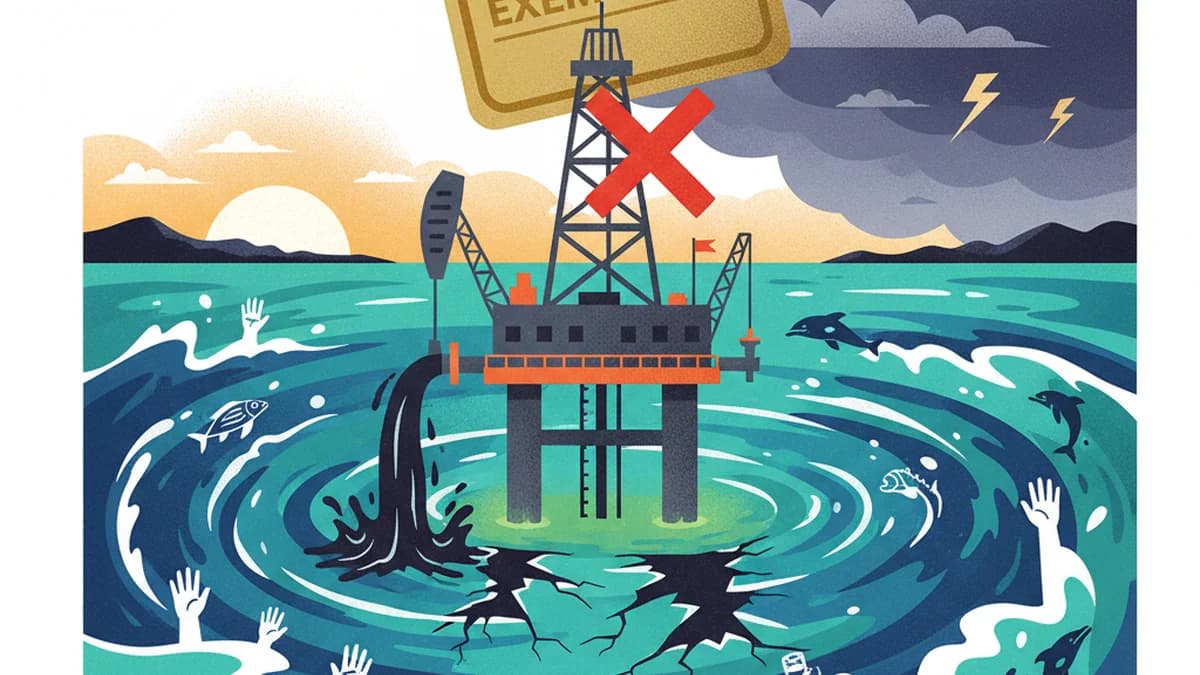
A United States government committee has granted a significant exemption for oil and gas operations in the Gulf of Mexico, bypassing critical protections under the Endangered Species Act (ESA). This decision, made by a panel that had not convened in over three decades, immediately triggers concerns from environmental groups regarding its potential impact on marine ecosystems.
Critics warn that the rare Rice's whale faces an increased risk of extinction, alongside broader threats to other vulnerable marine life. The exemption was approved following a request from Defense Secretary Pete Hegseth, sparking widespread condemnation.
Immediate Threats to Marine Life from Gulf of Mexico Drilling
Environmental advocates are sounding the alarm over the committee's vote, asserting that it places the critically endangered Rice's whale in grave peril. This species, unique to the Gulf waters, is particularly susceptible to the intensified activity from oil and gas exploration and drilling.
Conservationists argue that the move undermines decades of effort to protect vulnerable species. They highlight the potential for increased seismic testing, vessel traffic, and the risk of oil spills to severely disrupt the delicate balance of the Gulf's marine environment. (according to Reuters)
Exemption Fuels Political Controversy
The decision to exempt Gulf of Mexico drilling from the ESA is drawing sharp criticism, with opponents accusing the White House of exploiting what they term a "self-made gas crisis." This framing suggests that the administration is using perceived energy shortages as a pretext to weaken environmental regulations. (according to BBC News)
The Endangered Species Committee, sometimes referred to as the "God squad" due to its power to override species protections, last met over 30 years ago. Its re-convening and subsequent ruling underscore a contentious policy shift regarding energy production and environmental conservation in the region.
Reference: World news | The Guardian















Responses (0)