


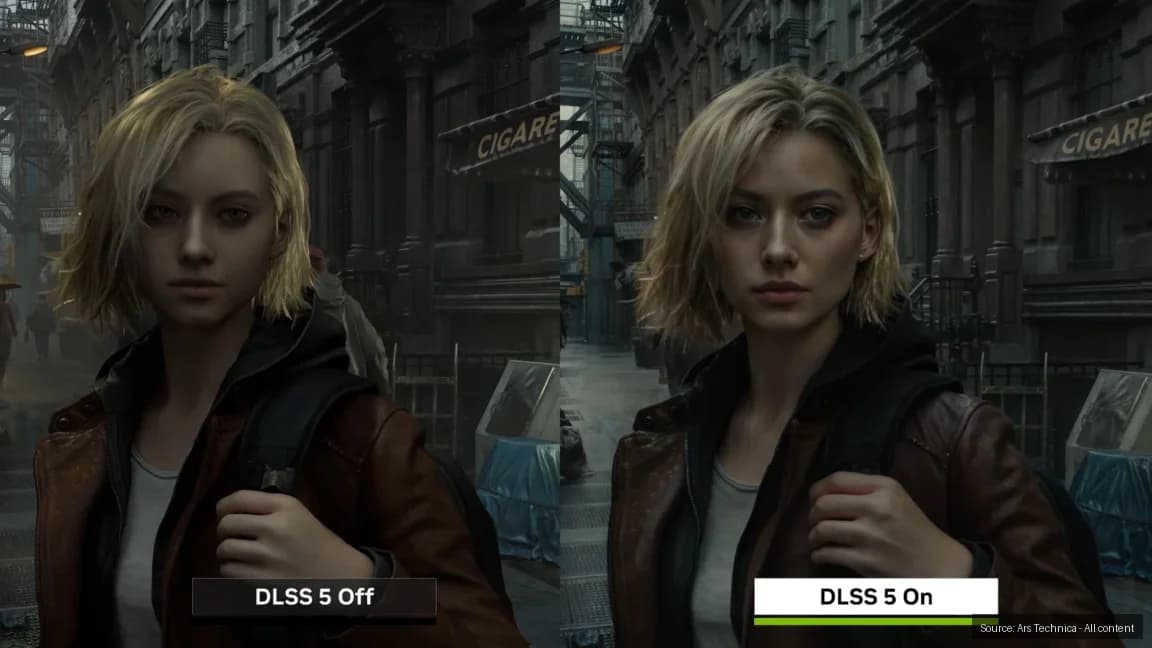
The gaming community is voicing significant apprehension regarding the potential future direction of Nvidia's Deep Learning Super Sampling (DLSS) technology, specifically a hypothetical DLSS 5 incorporating advanced generative AI. Discussions across forums and social media reveal widespread concern that such an evolution could fundamentally alter game visuals beyond traditional upscaling.
Generative AI Raises Visual Integrity Concerns
This emerging debate centers on the prospect of generative artificial intelligence actively modifying game assets and visual details. Unlike current DLSS iterations that primarily upscale resolutions and generate frames, a future DLSS 5 might leverage AI to "fill in" details or even create new visual elements.
This potential shift sparks worry among players who fear a departure from the developers' original artistic intent. Many gamers express a desire for fidelity that respects the source material, arguing that AI-generated visual enhancements, while potentially impressive, could introduce artifacts or stylistic inconsistencies.
The core concern is that DLSS 5 could become a tool for altering, rather than simply rendering, the game's aesthetic. This sentiment highlights a broader discussion about the role of AI in creative endeavors, as players want to experience games as their creators intended, without an AI layer potentially "reimagining" the visuals on the fly.
Impact on Artistic Vision and Development
The potential integration of generative AI within technologies like DLSS 5 also brings into question the long-term implications for game development and artistic control. Developers currently meticulously craft every detail, from character models to environmental textures.
An AI that dynamically alters these elements could challenge established workflows and artistic vision. Critics suggest that if generative AI becomes standard, it might inadvertently encourage a less precise approach to asset creation, relying on the AI to "fix" or enhance visuals post-production.
This could lead to a future where the player's experience is not fully aligned with the artist's original vision. The gaming industry watches closely as these discussions unfold, contemplating the balance between technological advancement and creative integrity.
Reference: Ars Technica - All content


















Responses (0)