
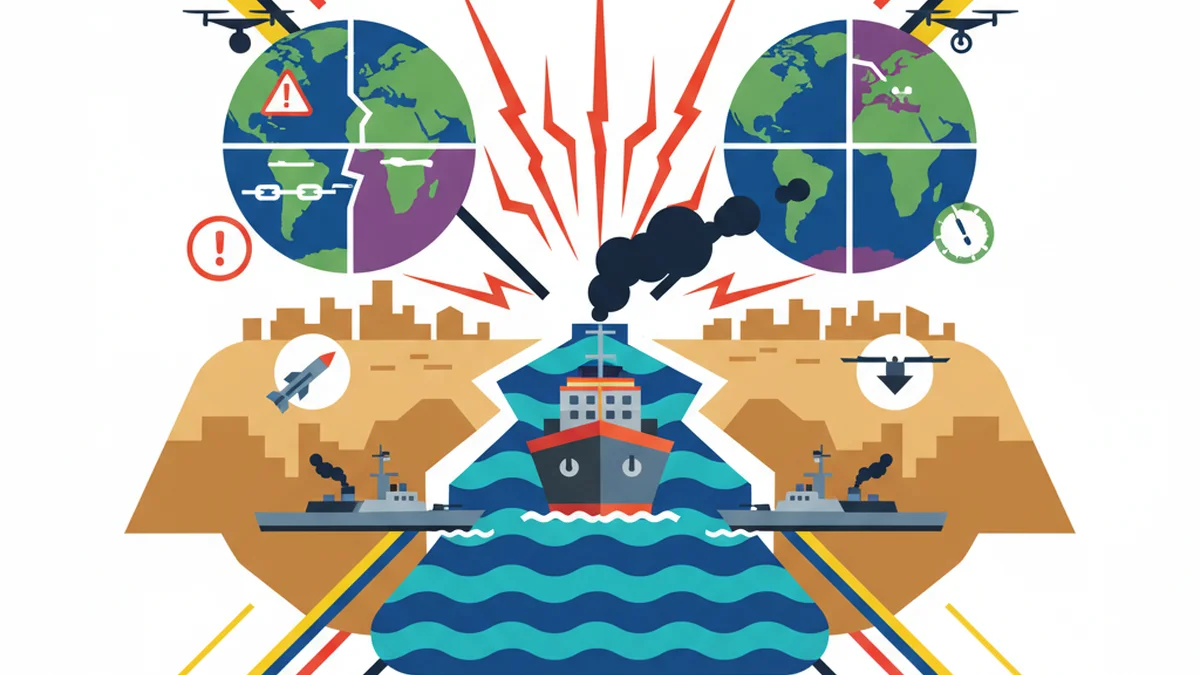
Heightened Strait of Hormuz tensions are gripping the international community as several nations consider potential forceful measures in response to Iran's threats regarding the vital waterway. This critical maritime choke point, essential for global oil shipments, faces an uncertain future amid escalating rhetoric.
The situation intensifies following statements from various countries indicating a readiness to intervene should Iran attempt to obstruct navigation through the strait. Such actions would directly impact global energy markets and international trade.
International Response to Strait of Hormuz Tensions
Global powers are closely monitoring developments, with diplomatic efforts underway to de-escalate the situation. However, the explicit threats of military intervention underscore the gravity with which the international community views any potential disruption.
Analysts suggest that a blockade would constitute a severe breach of international law, prompting a robust and coordinated response. The United States and its allies have consistently affirmed their commitment to ensuring freedom of navigation in the region. (according to Reuters)
Economic Implications and Future Outlook
The Strait of Hormuz is a crucial conduit for approximately one-fifth of the world's total oil consumption. Any sustained interruption would trigger significant spikes in global oil prices, destabilizing economies worldwide. (according to BBC News)
Beyond oil, the strait facilitates a substantial volume of international trade, making its security paramount for global economic stability. The current climate of Strait of Hormuz tensions demands careful navigation to prevent broader regional conflict.
The coming weeks will likely see intensified diplomatic activity as stakeholders work to avert direct confrontation. The world watches closely for signs of de-escalation or further escalation in this geopolitically sensitive region.
Reference: Al Jazeera – Breaking News, World News and Video from Al Jazeera








Responses (0)