


By: ABID SIDDIQUE CHAUDHRY
ISLAMABAD — As members of the global Sikh community and devotees across the world commemorate the 557th birth anniversary (Gurpurab) of Baba Guru Nanak Dev Ji, his timeless message of peace, human equality, and selfless service resonates as strongly today as it did over five centuries ago. As the founder of Sikhism and one of the most revered spiritual figures in the history of the Indian subcontinent, his teachings continue to serve as a universal beacon of tolerance and interfaith harmony.
Early Life in Nankana Sahib and the Legacy of "Sacha Sauda" (1469–1499)
Born on April 15, 1469 (corresponding to Kartik Purnima) in the village of Rai Bhoi Di Talwandi near Lahore—now revered globally as Nankana Sahib (marked by Gurdwara Janam Asthan)—Baba Guru Nanak Dev Ji was raised by his father, Mehta Kalu, and mother, Mata Tripta.
From an early age, his temperament stood apart from conventional worldly pursuits. Inclined toward deep spiritual reflection and compassion for the marginalized, he famously used funds entrusted to him by his father for commerce to feed hungry ascetics and the impoverished near Chuharkana. Remembered in Sikh tradition as "Sacha Sauda" (the True Bargain), this defining act laid the spiritual foundation for the enduring institution of Langar—the free community kitchen open to all without distinction.
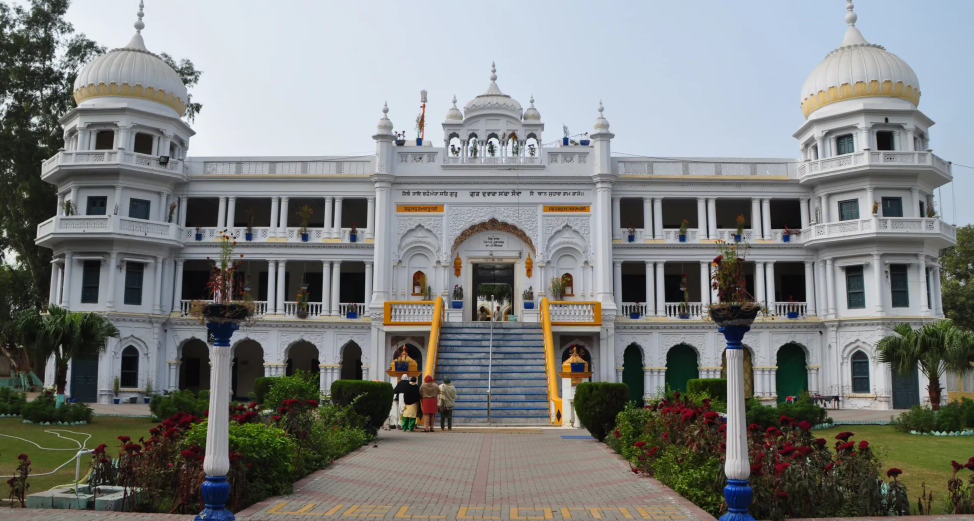
The Four Udasis: Eminabad (Gurdwara Rori Sahib) and Hasan Abdal (Gurdwara Panja Sahib) (1500–1524)
Around the age of thirty, following a profound spiritual awakening in 1499, Guru Nanak embarked on four extensive spiritual journeys between 1500 and 1524, recorded in history as the Four Udasis. Accompanied faithfully by his devoted companion and rabab player, Bhai Mardana Ji, he traveled across the entire subcontinent as well as to Mecca, Medina, Baghdad, Tibet, and Sri Lanka, engaging in interfaith dialogues centered on monotheism and universal brotherhood.
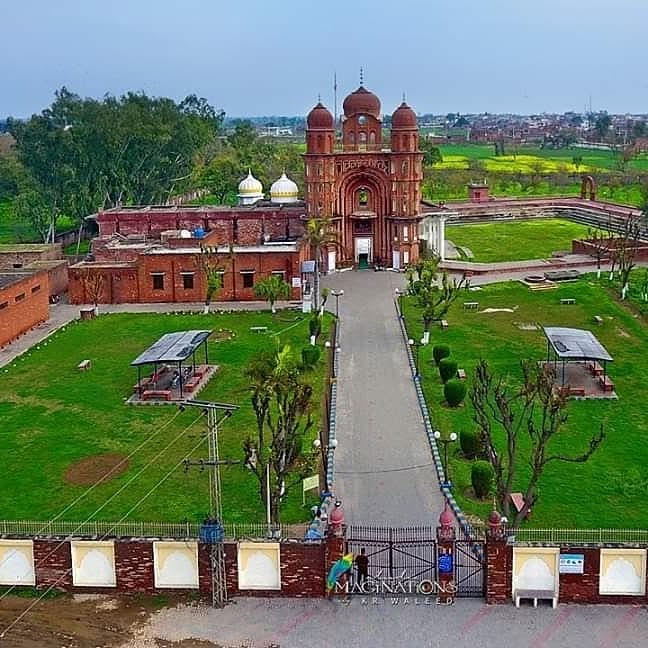
As his spiritual travels unfolded across the region, two landmark sites in present-day Pakistan became permanently woven into Sikh history in chronological succession:
Gurdwara Rori Sahib, Eminabad (District Gujranwala): During his travels through central Punjab, Eminabad emerged as one of the most sacred chapters of his mission. Here, Guru Nanak stayed with his devoted follower Bhai Lalo, a humble carpenter, rejecting the lavish feast of the wealthy yet oppressive Malik Bhago to uphold the dignity of honest labor. Following the devastation of Eminabad in 1521 during Babur's invasion, Guru Nanak sat and meditated on a bed of pebbles (rori) at this very site—giving Gurdwara Rori Sahib its historic name and spiritual significance.
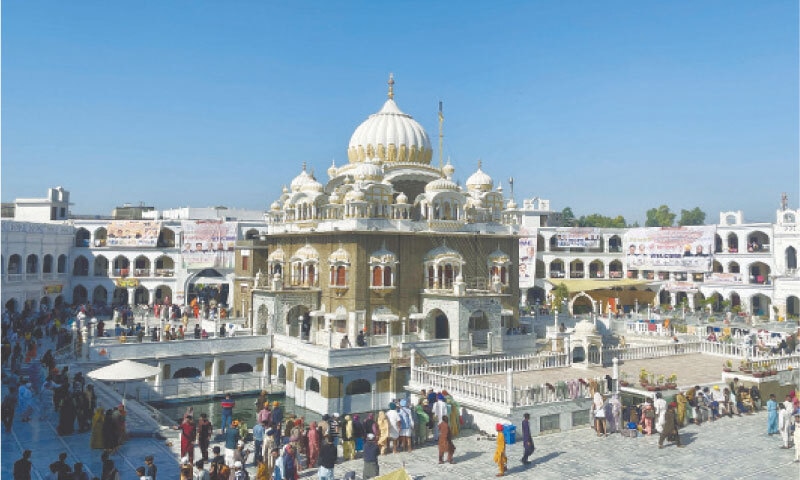
Gurdwara Panja Sahib, Hasan Abdal (District Attock): Continuing his journeys toward the northwest in 1521, Guru Nanak arrived at Hasan Abdal, where his companion Bhai Mardana grew intensely thirsty. According to Sikh tradition, a proud local recluse, Wali Qandhari, refused water from his hilltop spring and rolled a massive boulder down toward Guru Nanak. Unfazed, Guru Nanak stopped the descending rock with his outstretched palm—leaving a permanent handprint (Panja) imprinted in the stone as a spring of fresh water gushed forth beneath it. Today, Gurdwara Panja Sahib stands as a timeless monument to humility, compassion, and spiritual grace.
PeriodKey Chronological Milestones & Sacred Sites
1469 Born in Talwandi (present-day Nankana Sahib; site of Gurdwara Janam Asthan)
1499 Spiritual awakening and launch of his universal mission to serve humanity
1500 – 1521 Completed the Four Udasis, including his historic stays in Eminabad (Rori Sahib)
1521 Visited Hasan Abdal, leaving his sacred handprint at Gurdwara Panja Sahib)
1522 stablished the settlement of Kartarpur along the banks of the River Ravi (Gurdwara
Darbar Sahib)
1539 Passed away in Kartarpur after eighteen years of farming and community life
Three Golden Pillars of Humanism and Equality
Baba Guru Nanak Dev Ji’s philosophy distills spiritual devotion into practical ethical living through three foundational principles:
Naam Japo (Meditation on the Divine): Living in constant remembrance of the One Supreme Creator and aligning one's life with truth and Divine will.
Kirat Karo (Honest Living): Earning an honorable livelihood through diligent work and integrity, free from exploitation—a principle vividly demonstrated through his bond with Bhai Lalo in Eminabad.
Vand Chhako (Sharing with Others): Sharing one’s earnings, blessings, and resources with the needy and vulnerable.
Rejecting caste divisions, social hierarchy, and empty ritualism, Guru Nanak taught that all human beings emanate from the same Divine Light. The tradition he instituted of Pangat and Sangat—sitting together in a single row to share a meal regardless of faith, status, or background—remains one of the world’s most powerful living symbols of social equality.

Final Years at Kartarpur and Sacred Pilgrimage Across Pakistan (1522–1539)
Concluding his extensive travels, Guru Nanak spent the final eighteen years of his life in Kartarpur (District Narowal, Pakistan), a settlement he founded in 1522 along the River Ravi. There, he cultivated the land with his own hands, exemplifying the dignity of honest labor until his passing on September 22, 1539.
On his 557th birth anniversary, thousands of pilgrims from Pakistan, India, and across the international diaspora trace his sacred footsteps—gathering at Gurdwara Janam Asthan in Nankana Sahib, Gurdwara Rori Sahib in Eminabad, Gurdwara Panja Sahib in Hasan Abdal, and Gurdwara Darbar Sahib in Kartarpur—reaffirming his enduring truth that the essence of faith lies in love for humanity, tolerance, and selfless service.












Responses (0)