
By: Abid Siddique Chaudhry (Journalist, Islamabad)
The world Ambassador
______
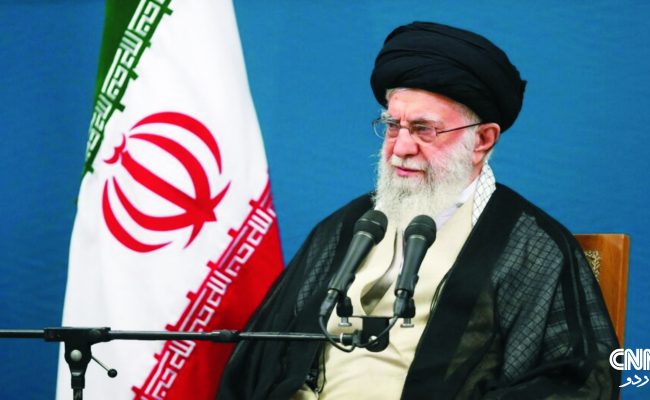
Ayatollah Seyyed Ali Khamenei is the second Supreme Leader of the Islamic Republic of Iran and is regarded as one of the most influential figures in contemporary Iranian history. Serving in this position since 1989, he is widely seen as a symbol of continuity, stability, and ideological coherence within Iran’s political system.
From a Religious Household to National Leadership
Ayatollah Khamenei was born in 1939 in Mashhad into a scholarly and religious family. His father, Ayatollah Seyyed Javad Khamenei, was a respected religious scholar known for his simplicity, learning, and piety. Growing up in this environment shaped Khamenei’s intellectual development and religious consciousness from an early age.
He began studying the Qur’an, jurisprudence (fiqh), principles of jurisprudence (usul), philosophy, and literature at a young age. His strong command of Persian and Arabic literature, as well as his interest in poetry, reflect a balanced personality that combines intellectual rigor with cultural refinement.
Revolutionary Struggle and National Service
During the era of the Shah, Ayatollah Khamenei was actively involved in movements for religious and intellectual awakening. This involvement led to imprisonment and significant hardship. Despite these challenges, his ideological commitment and resolve remained steadfast.
After the 1979 Islamic Revolution, he played a central role in shaping the new Islamic Republic. He served as Tehran’s Friday Prayer Leader, then as President of Iran from 1981 to 1989, before being appointed Supreme Leader following the death of Ayatollah Ruhollah Khomeini. Each of these roles marked important phases in Iran’s modern political history.
Ideological Leadership as Supreme Leader
As Supreme Leader, Ayatollah Khamenei is regarded as the guardian of Iran’s constitutional and ideological framework. His authority encompasses oversight of major state institutions, including the armed forces, judiciary, and key media bodies. He emphasizes national sovereignty, Islamic values, and institutional coordination, portraying his leadership as a source of continuity and ideological direction within the state.
Simple Lifestyle and Personal Traits
Ayatollah Khamenei is known for his modest lifestyle, disciplined routine, and scholarly temperament. He rarely travels abroad and resides in a relatively simple residence in Tehran. His personal interests include reading, poetry, and gardening.
In the early 1980s, he survived an assassination attempt that left his right arm partially paralyzed. Despite this injury, he has continued to perform his national responsibilities with determination and resilience.
Family Background and Scholarly Tradition
His wife, Mansoureh Khojasteh Bagherzadeh, comes from a respected and educated family. The couple has six children—four sons and two daughters. The family generally maintains a low public profile, and verified information about their private lives is limited. Their upbringing is commonly described as grounded in religious values, intellectual discipline, and simplicity.
The sons are believed to be involved primarily in academic and religious pursuits, while the daughters are known to prefer private lives away from public attention. Overall, the family is often portrayed as embodying scholarly dignity and cultural tradition.
The Role of Mojtaba Khamenei and Other Children
Among Ayatollah Khamenei’s children, Mojtaba Khamenei has attracted the most public attention. He received his early education at a well-known and influential school in Tehran and later pursued religious studies in Qom. He is married to the daughter of conservative politician Gholam-Ali Haddad-Adel.
Since the mid-2000s, Iranian political circles have increasingly discussed Mojtaba’s growing influence. In 2004, a presidential candidate accused him of behind-the-scenes political involvement. From around 2010 onward, analysts have often described him as one of Iran’s most influential figures, with some observers speculating about him as a potential successor to Ayatollah Khamenei—claims that are officially denied by the state.
Ayatollah Khamenei’s other sons—Mostafa, Masoud, and Meysam—are associated with religious, educational, or administrative roles but are generally viewed as remaining at a distance from direct political power. Very little public information is available about his daughters, Boshra and Hoda, though both are reported to be married into families connected with religious or state institutions. This has reinforced perceptions that the Khamenei family maintains deep connections within Iran’s power structure.
A Symbol of Ideological and Cultural Leadership
Ayatollah Seyyed Ali Khamenei is widely regarded as more than a political leader. His role encompasses ideological, intellectual, and cultural dimensions that have shaped Iran’s trajectory for decades. His life is often presented as an example of scholarship, perseverance, simplicity, and national service—qualities that have secured him a prominent and enduring place in Iran’s contemporary history.