
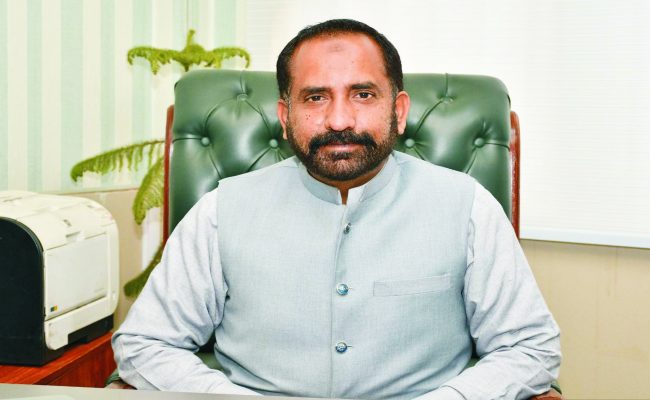
Author: Dr. Nadeem Ahmad Malik
TWA
__________
Traffic accidents remain one of the most pressing public safety challenges in the modern world. Every year, millions of people lose their lives or suffer serious injuries on roads across the globe. For developing countries in particular, the growing number of vehicles and inadequate infrastructure make road safety a constant concern. As a researcher working in the field of information technology, I have always wondered whether artificial intelligence could help predict and possibly prevent such tragic events before they occur. My research aimed to combine artificial intelligence, deep learning, and social media data to create a model capable of predicting traffic accidents in real time.
Traditional systems for monitoring traffic rely on road sensors, CCTV cameras, or manual reports, but these methods are often limited by high costs, technical failures, or insufficient coverage. In many developing nations, it is simply not possible to install and maintain such infrastructure everywhere. Meanwhile, millions of people share their daily experiences on social media, particularly on platforms like Twitter. They report traffic jams, accidents, and road blockages almost instantly, long before official reports reach authorities. This huge stream of public data, if analyzed properly, can serve as an early warning system for detecting and preventing accidents.
In my research, I collected a large number of tweets using a keyword-based search strategy. Over the course of a year, I gathered more than half a million geo-tagged tweets. After filtering and refining the data to remove irrelevant posts, I focused on those directly linked to road accidents. I then used natural language processing techniques to extract meaningful information from the text. The goal was not just to detect words like “accident,” “crash,” or “injured,” but also to understand relationships between words, such as “vehicle damage,” “road slippery,” or “heavy collision.” These combinations of words often reveal a stronger likelihood that a real accident has occurred.
To analyze the data, I designed a deep learning model called XLNet-BiLSTM, which combines two powerful artificial intelligence techniques. The XLNet component helps the system understand the meaning and order of words in a sentence, while the BiLSTM (Bidirectional Long Short-Term Memory) layer enables the model to interpret language from both directions—past and future context within the same sentence. This combination allows the system to understand not only what people are saying but also what they mean. For example, if a person tweets, “A horrible crash just happened near the highway,” the system recognizes it as a real accident event. However, if someone writes, “Traffic is horrible today,” the model correctly interprets it as frustration rather than an accident report.
The model could help authorities detect incidents earlier, send quick alerts to drivers, or even support emergency response teams in reaching the scene faster. In the long term, such a system could also be used by urban planners and policymakers to identify accident-prone zones and take preventive measures.
Of course, there are challenges that must be addressed. Social media data can be messy, full of slang, sarcasm, or incomplete information. Not every tweet accurately represents an event, and not all regions have the same level of social media activity. To improve the system further, future research should integrate additional data sources such as GPS data, CCTV footage, and weather conditions. Combining these different types of information would make predictions even more accurate and dependable.
This study opens new possibilities for how artificial intelligence can contribute to public safety and smarter transportation systems. By turning online human expressions into structured, machine-understandable information, we are moving closer to a world where accidents can be predicted and prevented through intelligent technology. This approach is not limited to traffic alone—it represents a broader shift toward using AI to interpret social behavior and make informed decisions for the benefit of society.
The vision is simple yet powerful: a future where technology listens to the voices of people, learns from their experiences, and helps save lives. Road safety is not only about infrastructure or enforcement; it is also about information, awareness, and timely action. If AI can provide that bridge, it has the potential to transform how we approach safety in our cities. As a researcher, I believe this work is a small but significant step toward making our roads smarter and safer for everyone.